






What's Happening?
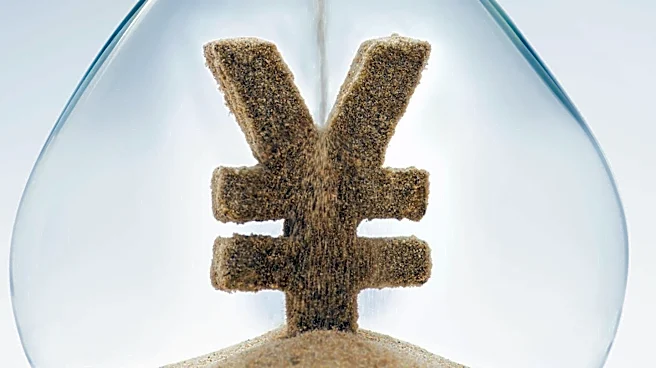
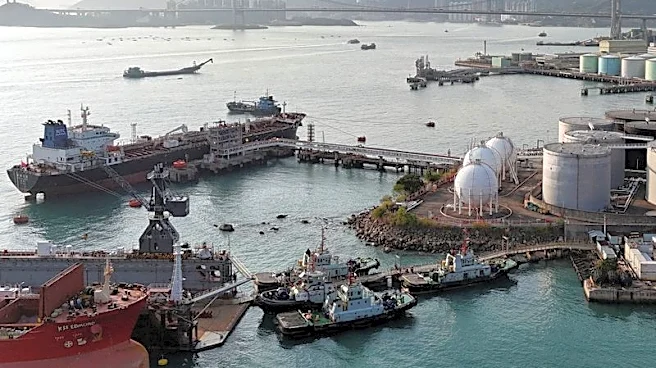
China's consumer price index (CPI) rose by 0.5% year-on-year in July, marking a six-month low, while the producer price index (PPI) increased by 3.5% year-on-year, according to official data. This cooling of inflation is attributed to lower oil prices
and weakening domestic demand, despite strong exports and factory output. The data suggests that deflationary pressures persist, with household demand subdued due to a property market slump and job security concerns. The Chinese government has signaled stronger fiscal spending to bolster growth, with the effects expected to materialize with a lag of about one quarter.
Why It's Important?
The cooling inflation in China highlights the challenges faced by the world's second-largest economy in balancing strong export performance with weak domestic consumption. The persistent deflationary pressures could impact global markets, particularly those reliant on Chinese consumer demand. The Chinese government's commitment to increased fiscal spending may provide a boost to infrastructure projects, potentially stabilizing the economy. However, the ongoing geopolitical tensions, such as the US-Israel conflict with Iran, add uncertainty to global energy prices, which could further influence inflation trends.
What's Next?
China's leadership is expected to continue its focus on fiscal measures to stimulate domestic demand and counteract deflationary pressures. The effectiveness of these measures will be closely monitored by global markets, as any significant shifts in China's economic policy could have widespread implications. Additionally, the geopolitical landscape, particularly in the Middle East, will remain a critical factor in determining future inflationary trends and economic stability.