





What's Happening?
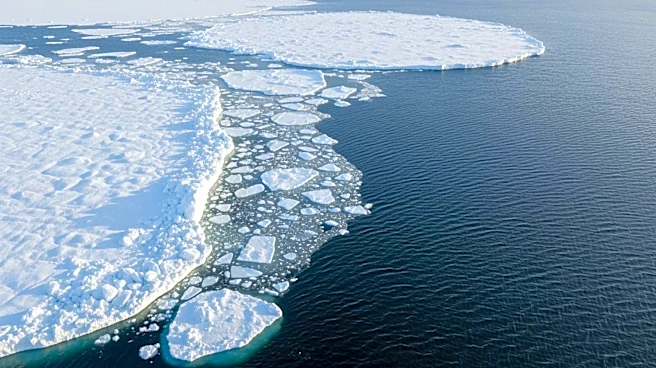
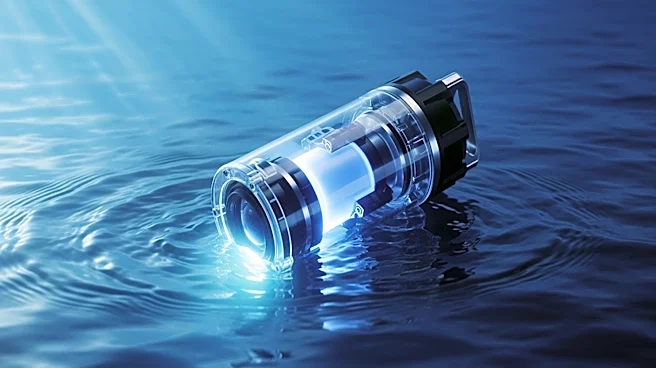
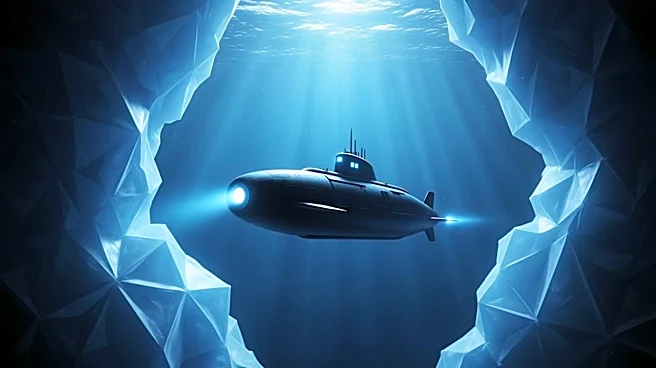
In 2022, the autonomous underwater vehicle 'Ran' was deployed by the International Thwaites Glacier Collaboration to explore the cavity beneath West Antarctica's Dotson Ice Shelf. The mission revealed unexpected ice formations, including terraces, channels,
and teardrop-shaped pits, which were not visible via satellite. These findings provided new insights into the ice shelf's structure. However, during a follow-up mission in 2024, Ran disappeared without a trace, leaving no debris. Despite its loss, the data collected has been invaluable in understanding the dynamics of ice melting in Antarctica.
Why It's Important?
The discovery of these unique ice formations is crucial for understanding the melting processes of Antarctic ice shelves. The data suggests that the melting is influenced by the Circumpolar Deep Water current, which affects the stability of the ice shelf. As these ice shelves act as barriers to land-based glaciers, their thinning could lead to increased glacier flow into the ocean, contributing to global sea level rise. This research is vital for improving climate models and predicting future sea level changes, which have significant implications for coastal communities worldwide.
Beyond the Headlines
The disappearance of Ran highlights the challenges and risks associated with deep-sea exploration. The harsh conditions of the Antarctic environment pose significant obstacles to scientific research. Despite these challenges, the mission underscores the importance of technological advancements in autonomous exploration. The findings from Ran's mission contribute to a broader understanding of climate change impacts and emphasize the need for continued research and innovation in polar science. The data collected will aid in developing strategies to mitigate the effects of rising sea levels on vulnerable regions.