






What's Happening?
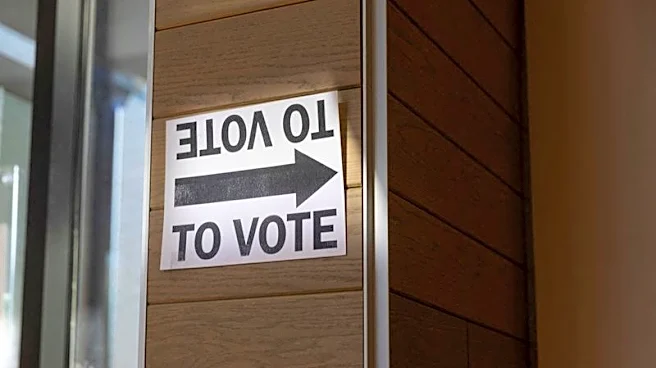
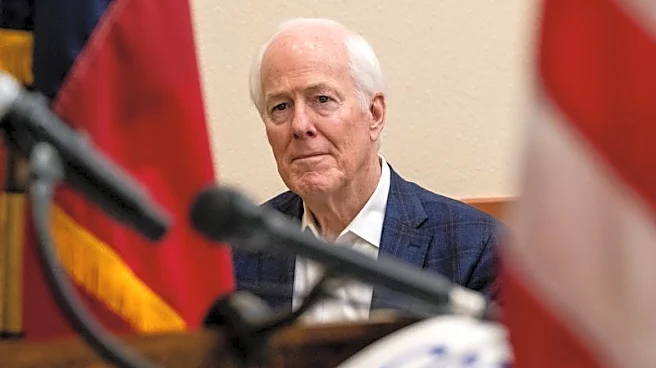
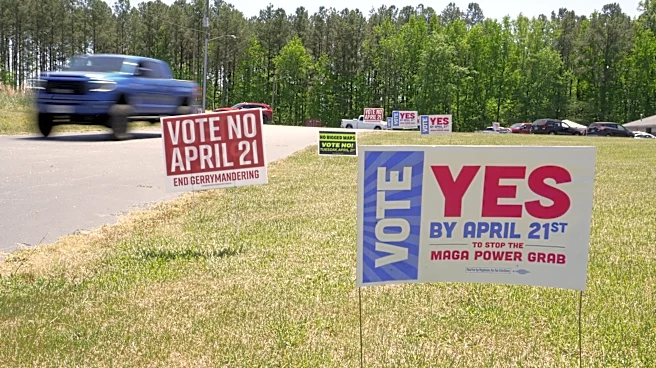
In a significant political development, the South Carolina Senate has rejected a Republican proposal to redraw congressional districts ahead of the November midterm elections. This decision comes as early in-person voting begins in the state's primaries.
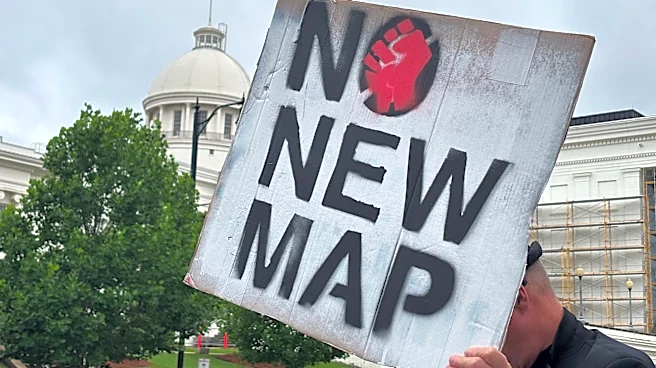
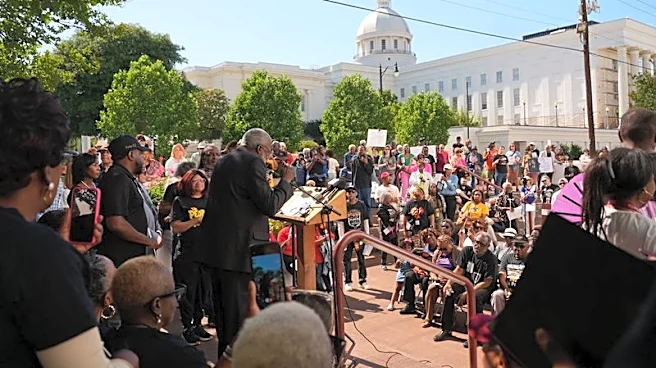
The proposal, backed by President Trump, aimed to cancel current congressional votes and schedule a new primary under revised districts to favor the GOP. Republican state Sen. Richard Cash expressed that it was too late to make such changes, emphasizing the ongoing voting process. This move is part of a broader Republican strategy to leverage a recent U.S. Supreme Court ruling that weakened minority protections under the Voting Rights Act. Meanwhile, a federal court in Alabama blocked a Republican-drawn map, citing racial discrimination, and ordered the use of a court-imposed map with more Black-majority districts.
Why It's Important?
The rejection of the redistricting proposal in South Carolina highlights the ongoing national battle over voting district boundaries, which has significant implications for the balance of power in Congress. The GOP's efforts to redraw districts are seen as a strategy to maintain their slim majority in the House. The decision in South Carolina, along with the federal court's ruling in Alabama, represents a setback for Republican efforts to reshape electoral maps to their advantage. These developments underscore the contentious nature of redistricting, which can influence electoral outcomes and representation, particularly for minority communities. The outcomes of these legal and legislative battles will likely impact the political landscape leading into the midterm elections.
What's Next?
The political and legal battles over redistricting are expected to continue, with potential appeals and further court rulings. Alabama's Attorney General has vowed to appeal the federal court's decision to the U.S. Supreme Court. In South Carolina, the focus will shift to the ongoing primaries and the potential impact of the Senate's decision on voter turnout and party dynamics. Nationally, both parties will continue to strategize around redistricting efforts, with Democrats seeking to protect minority representation and Republicans aiming to consolidate their electoral advantages. The outcomes of these efforts will play a crucial role in shaping the composition of the next Congress.