







What's Happening?
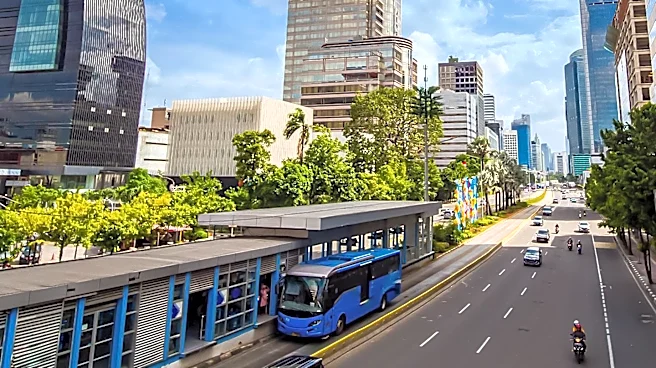
The Jakarta government is planning to expand its public bus operator, TransJakarta, to manage new sea and air transportation services. The sea transport component involves TransJakarta taking over public boat services to the Thousand Islands by mid-2027,
with the goal of improving efficiency and lowering fares. The air transport proposal is a long-term vision that includes options like helicopters, though the specific aircraft type remains undecided. This expansion, particularly the air component, has drawn criticism from legislators and transport experts due to concerns about its high cost and financial viability as a mass transit option. Governor Pramono Anung emphasized the need for air transport in a metropolitan area of Jakarta's size, citing its 11 million residents and the wider metropolitan area's 42 million people. He also mentioned the importance of having rules and permits in place for air services, referencing New York's existing regulations.
Why It's Important?
This initiative highlights a growing trend in large metropolitan areas to address urban mobility challenges through diverse transportation modes. While the immediate focus is on Jakarta, the discussions around cost, viability, and the integration of new technologies like electric vertical take-off and landing aircraft (eVTOLs) could set precedents or offer lessons for other global cities, including those in the U.S., grappling with similar issues. The debate over whether public transport operators should expand beyond their core competencies into more capital-intensive and potentially less accessible modes like air travel is significant. It raises questions about public funding allocation, equitable access to transportation, and the role of government in fostering innovative but costly solutions. The success or failure of Jakarta's venture could influence future urban planning and transportation strategies in other densely populated regions worldwide.
What's Next?
TransJakarta is scheduled to take over boat services to Jakarta’s Thousand Islands by June 2027. The air transport component remains a medium- to long-term plan, with no immediate timeline for implementation or specific aircraft type decided. The Jakarta Legislative Council will continue to scrutinize the proposed regulatory changes, which include widening TransJakarta’s remit and increasing its authorized capital from 5.225 trillion rupiah to 13.4 trillion rupiah. Further discussions and public debate are expected regarding the financial implications and feasibility of the air transport proposal. The government will likely need to address the concerns raised by legislators and transport experts regarding the cost-effectiveness and accessibility of air services as a mass transit option. The development of electric vertical take-off and landing aircraft (eVTOLs) could also play a role in future considerations, though Jakarta has not yet announced plans to use these aircraft.
Beyond the Headlines
The Jakarta government's ambitious plan to integrate air transport into its public system reflects a broader global aspiration among megacities to overcome severe traffic congestion and improve connectivity. This move, while innovative, also brings to light the inherent tension between providing accessible, affordable public services and adopting high-cost, potentially exclusive transportation solutions. The criticism regarding financial viability and equity underscores a critical ethical dimension: should public funds be allocated to services that might only benefit a small, affluent segment of the population, or should the focus remain on expanding and improving traditional mass transit options? This debate is not unique to Jakarta and resonates in many U.S. cities exploring similar advanced air mobility concepts. The long-term success of such initiatives will depend not only on technological advancements but also on robust policy frameworks that ensure inclusivity, environmental sustainability, and fiscal responsibility.