



What's Happening?
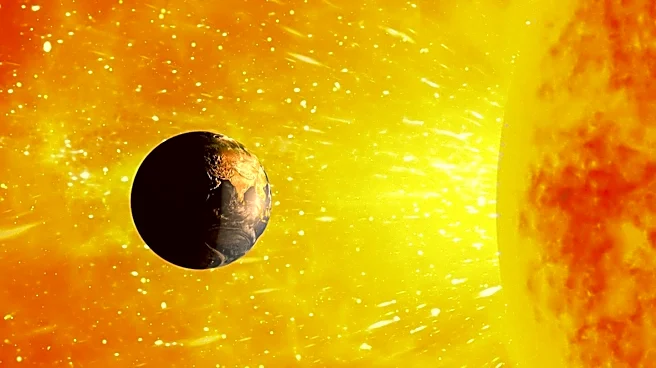
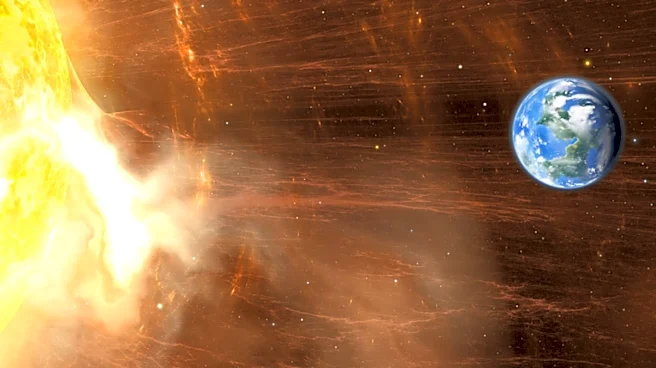
A long-duration M1.9 solar flare from Active Region 4492 has produced an Earth-directed coronal mass ejection (CME), expected to cause G1-G2 geomagnetic storm conditions on August 2, 2026. The flare coincided with a filament eruption and was accompanied
by several radio sweeps and a Tenflare. The proton flux crossed the S1 solar radiation storm threshold, indicating increased solar activity. The CME is anticipated to enhance solar wind parameters, potentially affecting Earth's geomagnetic field.
Why It's Important?
Geomagnetic storms can have significant impacts on Earth's technological systems, including power grids, satellite operations, and communication networks. The anticipated G1-G2 storm conditions could lead to voltage alarms in high-latitude power systems and affect satellite orientation and drag. Additionally, auroras may be visible at lower latitudes than usual. Monitoring and preparing for these effects is crucial for mitigating potential disruptions and ensuring the resilience of critical infrastructure.
What's Next?
As the CME approaches Earth, space weather agencies will continue to monitor solar wind parameters and geomagnetic conditions. Operators of power grids and satellites may need to implement precautionary measures to protect systems from potential disruptions. The public is advised to stay informed about the possibility of visible auroras and any impacts on communication systems. Further solar activity is expected to remain low, with a chance of additional M-class flares.