
What's Happening?
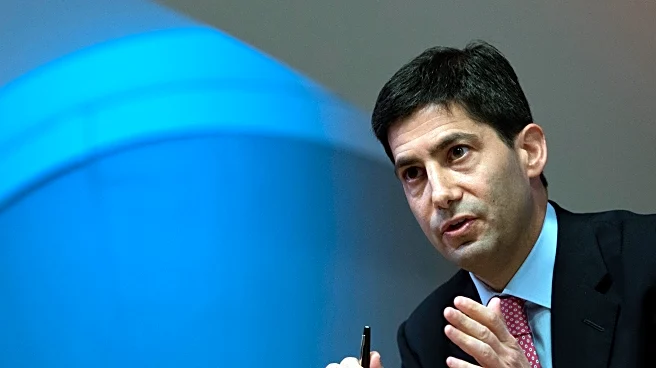
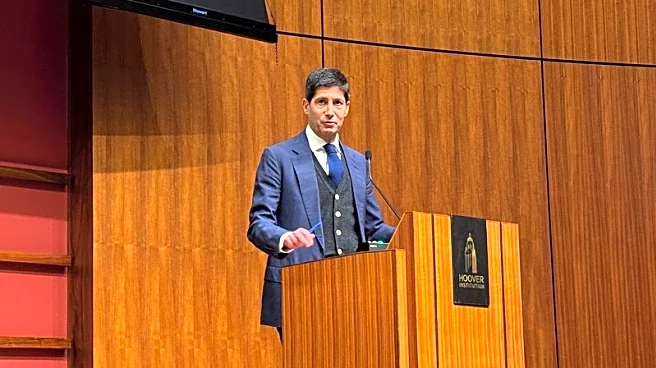
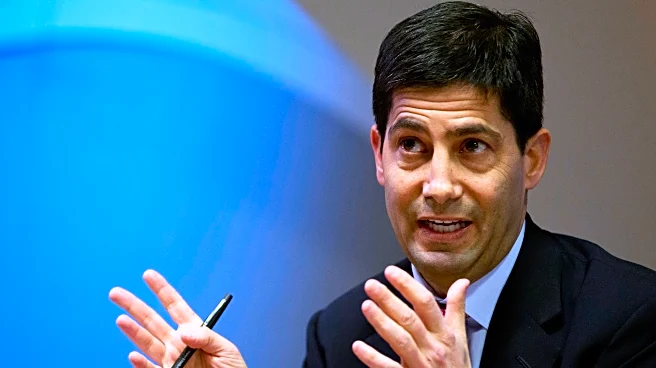
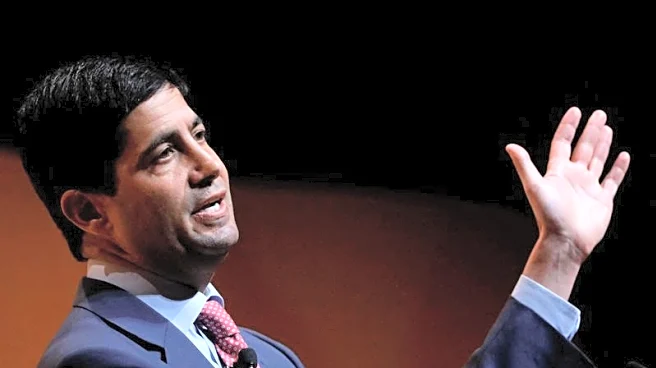
President Trump is set to nominate Kevin Warsh, a former Federal Reserve governor, as the next chair of the Federal Reserve. Warsh, who served as a Fed governor from 2006 to 2011, is known for his critical
stance on the Fed's monetary policies, particularly its expanded balance sheet. His nomination comes at a time when Trump is attempting to exert more control over the central bank, which has traditionally operated independently. Warsh's nomination is expected to replace Jerome Powell, who has been at odds with Trump over interest rate policies. Warsh's views align with Trump's push for lower borrowing costs, which he believes are necessary to stimulate economic growth. The nomination has sparked debate over the potential impact on the Fed's independence and its ability to manage the economy without political interference.
Why It's Important?
The nomination of Kevin Warsh as Federal Reserve Chair is significant as it could alter the dynamics of U.S. monetary policy. Warsh's alignment with President Trump's views on interest rates suggests a shift towards more accommodative monetary policies, which could lead to lower borrowing costs. This may benefit businesses and consumers by encouraging investment and spending. However, it raises concerns about the Fed's independence, a cornerstone of its ability to manage the economy effectively. The potential politicization of the Fed could undermine its credibility and lead to instability in financial markets. Additionally, Warsh's nomination may face resistance in the Senate, reflecting broader concerns about maintaining the central bank's autonomy.
What's Next?
If confirmed, Warsh will face the challenge of balancing the administration's push for lower interest rates with the Fed's mandate to ensure economic stability. His approach to managing the Fed's balance sheet and interest rates will be closely watched by investors and policymakers. The Senate confirmation process may be contentious, with some lawmakers expressing concerns about the implications for the Fed's independence. Warsh's ability to navigate these challenges will be crucial in determining the future direction of U.S. monetary policy.