







What's Happening?
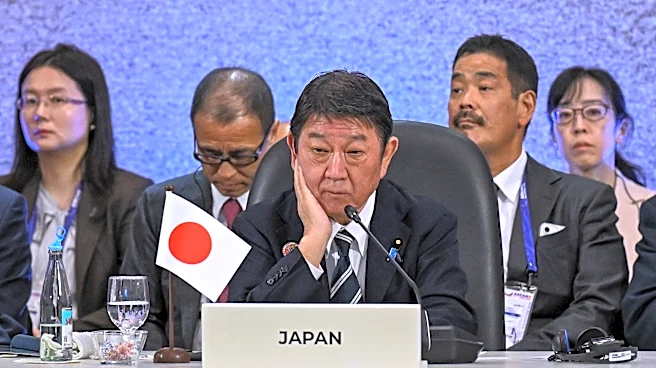
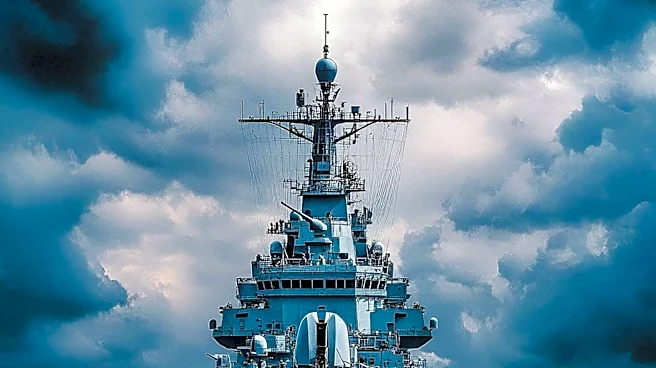
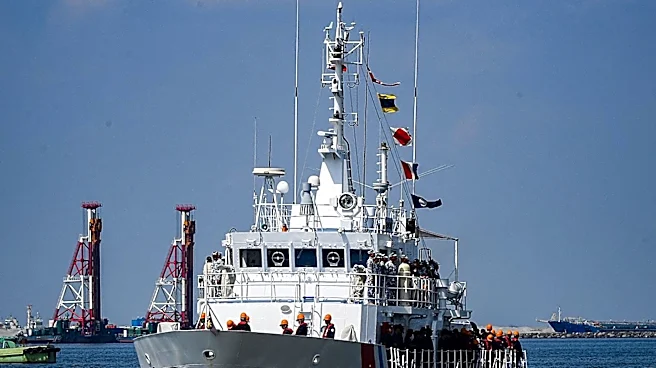
The United States and Japan joined the Philippines in conducting joint naval exercises in the South China Sea from July 21 to 25, 2026. These drills involved warships, coast guard vessels, surveillance aircraft, and fighter jets, aiming to enhance interoperability
among the participating nations. The exercises occurred amidst heightened tensions between Manila and Beijing, following confrontations at Second Thomas Shoal and reports of Chinese water cannon use near Scarborough Shoal. The drills are part of ongoing efforts to demonstrate a commitment to freedom of navigation and overflight in the region.
Why It's Important?
The joint naval exercises underscore the strategic importance of the South China Sea, a vital maritime route for global trade. The participation of the U.S. and Japan alongside the Philippines highlights the strengthening of alliances in response to China's assertive territorial claims in the region. These drills serve as a deterrent against aggressive actions and reinforce the commitment of these nations to uphold international maritime laws. The exercises also reflect broader geopolitical dynamics, where regional security and stability are increasingly prioritized amid rising tensions.
What's Next?
The continuation of such joint exercises is likely as the involved nations seek to maintain a balance of power in the South China Sea. Future drills may involve more countries, further solidifying alliances and enhancing regional security cooperation. The exercises could prompt diplomatic responses from China, potentially leading to increased dialogue or further military posturing. The situation remains fluid, with the potential for both diplomatic and military developments as stakeholders navigate the complex geopolitical landscape.