



What's Happening?
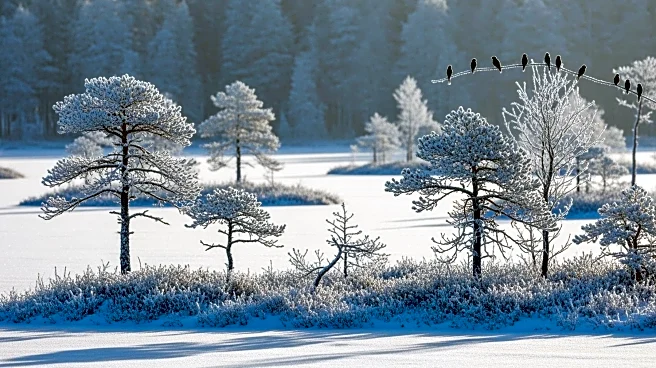
Minnesota's Sax Zim Bog, despite its freezing and snow-covered conditions, is a popular destination for birders worldwide. The bog is home to owls, hawks, and rare songbirds that typically reside in northern Canada. These birds are increasingly affected
by climate change, prompting local scientists and wildlife enthusiasts to focus on habitat conservation. The bog is a peatland, which is highly effective at storing carbon, making it a critical area for climate conservation efforts. Volunteer naturalist Rich Hoeg has installed listening devices across northern Minnesota to capture recordings of elusive bird species, contributing valuable data to scientific studies, particularly concerning owls.
Why It's Important?
The Sax Zim Bog serves as a crucial habitat for bird species that are under threat from climate change. Its role as a carbon sink highlights its importance in global climate conservation efforts. The work being done by scientists and volunteers like Rich Hoeg not only aids in preserving biodiversity but also enhances our understanding of the impacts of climate change on wildlife. This conservation effort is significant for maintaining ecological balance and supporting the global fight against climate change. The data collected from the bog can inform broader environmental policies and conservation strategies.
What's Next?
Continued conservation efforts at Sax Zim Bog are expected to focus on habitat preservation and further scientific research. The data collected by listening devices will likely be used to inform future studies and conservation strategies. Stakeholders, including environmental organizations and government agencies, may increase their involvement to support these efforts. Public awareness campaigns could also be initiated to highlight the importance of such habitats in climate change mitigation.
Beyond the Headlines
The Sax Zim Bog's role as a carbon sink underscores the broader environmental significance of peatlands globally. As climate change continues to impact ecosystems, the preservation of such areas becomes increasingly vital. The bog's conservation efforts may serve as a model for similar initiatives worldwide, emphasizing the interconnectedness of biodiversity conservation and climate action. Additionally, the involvement of citizen scientists like Rich Hoeg highlights the importance of community engagement in environmental conservation.