




What's Happening?
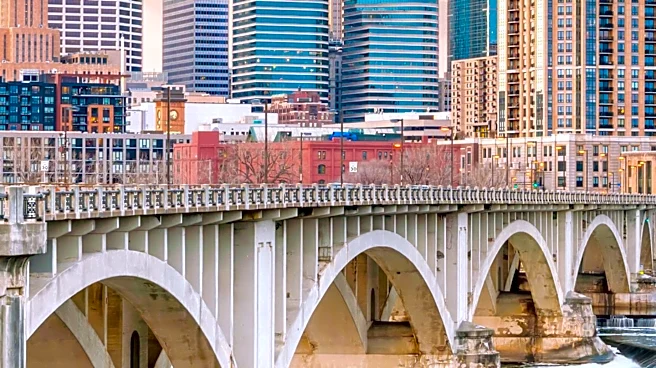
Minneapolis is confronting significant challenges in its efforts to replace lead water pipes, with state and federal funding for these projects set to expire by the end of 2027. The city has approximately 37,000 privately owned lead service lines that
need replacement. Unlike St. Paul, where a portion of the lead pipes are publicly owned, Minneapolis must rely on external funding as utility fees cannot be used for private infrastructure improvements. The 2026 bonding bill allocated only $15 million for lead line replacement across the entire state of Minnesota, a fraction of the $250 million advocates had requested. This funding gap forces the Minneapolis Public Works department to prioritize certain neighborhoods, such as the Northside 'green zone' and licensed daycare facilities, potentially delaying replacements in other areas. Despite the challenges, the city's Water Treatment and Distribution division director, Annika Bankston, reassures residents that the water treatment plant uses a corrosion control additive to prevent lead from dissolving into the water, meaning tap water should not contain lead.
Why It's Important?
The impending expiration of funding for lead pipe replacement in Minneapolis carries significant public health and infrastructure implications. Lead exposure, particularly in children, can lead to severe health issues including damage to the central nervous system, impaired hearing, blood cell damage, and learning disabilities. While Minneapolis currently treats its water to mitigate lead exposure, the long-term goal of removing lead pipes is crucial for permanent safety. The reliance on state and federal funds highlights a broader issue of how municipalities finance essential infrastructure upgrades, especially when private property is involved. The disparity in funding mechanisms between Minneapolis and St. Paul, where St. Paul can use ratepayer money for publicly owned pipe sections, underscores the need for more flexible and robust funding solutions for cities facing similar challenges. A failure to secure additional funding could prolong the presence of lead pipes, increasing future health risks and infrastructure costs.
What's Next?
With funding set to expire at the end of 2027, Minneapolis public works employees will continue the difficult task of prioritizing lead line replacement projects. The city plans to move to the Southside 'green zone' in the coming year, which includes Phillips West, Midtown Phillips, and East Phillips, after prioritizing the Northside and daycare facilities. Officials are hopeful that the state will come together to prioritize additional funding for lead service line replacements, as it is a widespread issue affecting both small towns and large cities across Minnesota. Residents who have not yet had their pipes replaced can order free lead test kits in both Minneapolis and St. Paul. Without renewed state or federal funding, St. Paul's goal of replacing all lead pipes by 2033 is expected to be delayed by an additional five years, indicating a similar fate for Minneapolis's more extensive replacement needs.
Beyond the Headlines
The situation in Minneapolis reflects a national challenge in addressing aging water infrastructure and the legacy of lead pipes. While immediate health risks are mitigated by water treatment, the presence of lead pipes represents an ongoing environmental justice issue, often disproportionately affecting older, lower-income neighborhoods. The debate over funding mechanisms—whether through federal grants, state allocations, or local utility fees—touches upon fundamental questions of public responsibility and private property rights. The long-term solution requires not only financial investment but also innovative approaches to infrastructure management and public-private partnerships. The experience of Minneapolis and St. Paul could serve as a case study for other U.S. cities grappling with similar lead pipe issues, emphasizing the need for proactive policy-making and sustained funding to ensure safe drinking water for all communities.