



What's Happening?
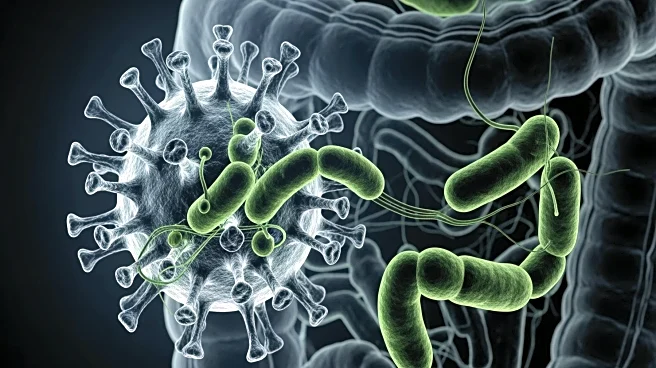
Researchers from the University of Southern Denmark and Odense University Hospital have discovered a previously unidentified virus within a common gut bacterium, Bacteroides fragilis, which appears more frequently in patients with colorectal cancer. This
bacterium is typically found in healthy individuals, making its association with cancer puzzling. The study, published in Communications Medicine, suggests that the virus, a bacteriophage living inside the bacterium, may play a role in the disease. The research began with data from a Danish population study and was later expanded to include nearly 900 individuals from Europe, the United States, and Asia. The findings indicate a statistical association between the virus and colorectal cancer, though it remains unclear if the virus directly contributes to the disease.
Why It's Important?
Colorectal cancer is a leading cause of cancer-related deaths in the Western world, and understanding its triggers is crucial for prevention and treatment. The discovery of a virus linked to this cancer type could open new avenues for research and screening. If the virus is found to alter the bacterium's properties, it might change the gut environment, potentially contributing to cancer development. This research could lead to new diagnostic tools, such as stool tests for the virus, to identify individuals at higher risk. The study highlights the importance of the gut microbiome in health and disease, offering a new perspective on colorectal cancer's environmental risk factors.
What's Next?
Further research is needed to determine whether the virus directly causes colorectal cancer or is merely a marker of other changes in the gut. The researchers plan to explore whether the virus can be used in screening tests to identify individuals at increased risk. Preliminary analyses suggest that certain viral sequences could identify around 40% of cancer cases. However, these findings are still in the experimental stage, and more studies are required before they can be applied in clinical practice. The research team aims to investigate how the virus might alter the bacterium and the gut environment, potentially contributing to cancer development.