



What's Happening?
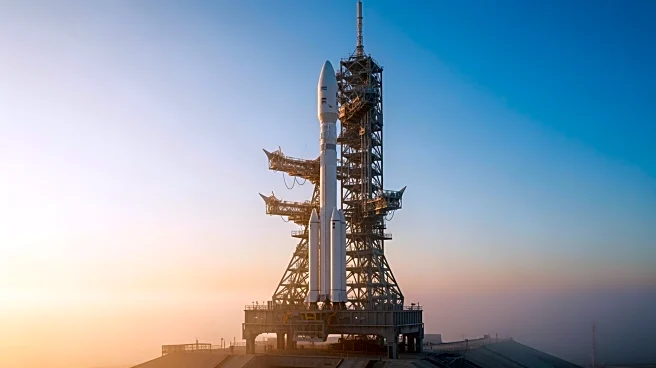
NASA's Space Launch System (SLS) and Orion spacecraft have been moved back to the launch pad at Kennedy Space Center in Florida. This marks the second time the giant Moon rocket has been positioned for a mission aimed at sending astronauts around the Moon,
a feat not attempted in over 50 years. The 98-meter-tall rocket made a four-mile journey from its assembly building to Pad 39B, signaling a significant step in the Artemis II mission preparations.
Why It's Important?
The Artemis II mission is a pivotal part of NASA's efforts to return humans to the Moon and eventually establish a sustainable presence there. This mission will test the capabilities of the SLS and Orion spacecraft, providing critical data and experience for future lunar missions. The successful execution of Artemis II could pave the way for subsequent missions, including the eventual goal of landing astronauts on the lunar surface. This initiative is part of a broader strategy to explore deeper into space, potentially leading to human missions to Mars.
What's Next?
With the rocket now at the launch pad, NASA will conduct a series of tests and checks to ensure all systems are ready for the mission. The timeline for the actual launch will depend on the outcomes of these preparations. As the mission progresses, NASA will continue to engage with international partners and private companies to support the broader goals of the Artemis program, including lunar exploration and beyond.