



What's Happening?
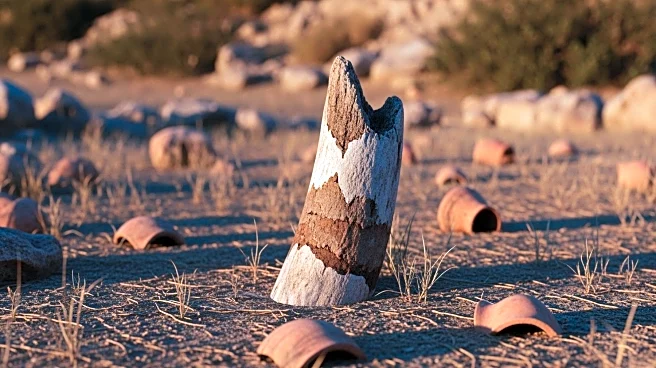
Archaeologists in southern Spain have uncovered an elephant foot bone that may provide the first concrete evidence of Hannibal's use of war elephants during his campaigns against Rome. The discovery was made at an Iron Age site near Cordoba, known as Colina
de los Quemados. Led by Professor Rafael M. Martínez Sánchez, the team used carbon dating to estimate the bone's age, linking it to the Second Punic War between the late third and early second century BCE. The bone was found alongside artillery, coins, and ceramics, suggesting the site was a battlefield. The researchers compared the bone to those of modern elephants and steppe mammoths to determine its origin. While the bone may not belong to one of the elephants Hannibal famously took across the Alps, it could represent the first known relic of the animals used in the Punic Roman wars.
Why It's Important?
This discovery is significant as it provides tangible evidence supporting historical accounts of Hannibal's use of elephants in warfare, a topic that has long intrigued historians and scholars. The presence of such large animals in ancient military campaigns highlights the logistical and strategic challenges faced by armies of the time. For historians, this find could offer new insights into the military tactics and capabilities of the Carthaginian forces. Additionally, it underscores the importance of archaeological research in verifying historical narratives and expanding our understanding of ancient civilizations.