




What's Happening?
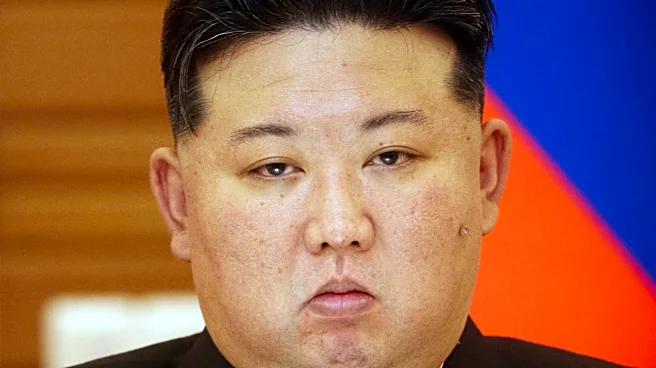
Prime Minister Sanae Takaichi attended a rally in Tokyo on November 8, advocating for the return of Japanese citizens abducted by North Korea. She expressed her willingness to meet with North Korean leader Kim Jong Un to build a constructive relationship
and achieve tangible results, a stance she has maintained since taking office. Despite her efforts, nearly a year into her premiership, no abductees have been returned. Chief Cabinet Secretary Minoru Kihara highlighted the role of the National Intelligence Bureau, established in July, in enhancing intelligence gathering and inter-agency coordination to resolve the issue. The rally underscored the urgency of the situation, particularly as the 50th anniversary of Megumi Yokota's abduction approaches next year, and her 90-year-old mother, Sakie Yokota, remains the last surviving parent among the abductees' families.
Why It's Important?
The issue of Japanese abductees by North Korea is a deeply emotional and politically charged matter in Japan, impacting national sentiment and foreign policy. The Prime Minister's direct call for a summit with North Korea's leader signifies a high-level commitment to resolving this long-standing humanitarian crisis. A successful resolution could lead to a significant diplomatic breakthrough between Japan and North Korea, potentially easing regional tensions and setting a precedent for international cooperation on similar human rights issues. Conversely, continued stalemate could further strain bilateral relations and fuel public frustration within Japan, especially as the abductees and their families age, making time a critical factor. The involvement of the National Intelligence Bureau also highlights a strategic shift towards more robust intelligence-led efforts to address the issue.
What's Next?
The immediate next step involves North Korea's response to Prime Minister Takaichi's call for a summit. Should a meeting materialize, the focus will be on the agenda and the concrete steps proposed for the abductees' return. The Japanese government, through the National Intelligence Bureau, will likely continue its intelligence-gathering and analytical efforts to support any diplomatic initiatives. The families of the abductees, represented by Takuya Yokota, will continue to press for swift action, emphasizing the dwindling time for a resolution. The upcoming 50th anniversary of Megumi Yokota's abduction will likely serve as a significant milestone, intensifying public and political pressure on both governments to achieve a breakthrough.
Beyond the Headlines
The abductee issue transcends a simple diplomatic dispute; it represents a profound human tragedy that has shaped Japanese society and its perception of North Korea for decades. The aging of the abductees' parents, particularly Sakie Yokota, adds a poignant layer of urgency, transforming the political issue into a race against time for personal closure. The government's sustained focus on this issue, despite its long duration, reflects a deep-seated national commitment to its citizens' welfare, even those abducted decades ago. The potential for a summit, if successful, could not only bring home the abductees but also foster a broader re-evaluation of engagement strategies with reclusive states, emphasizing humanitarian concerns as a cornerstone of international relations.