



What's Happening?
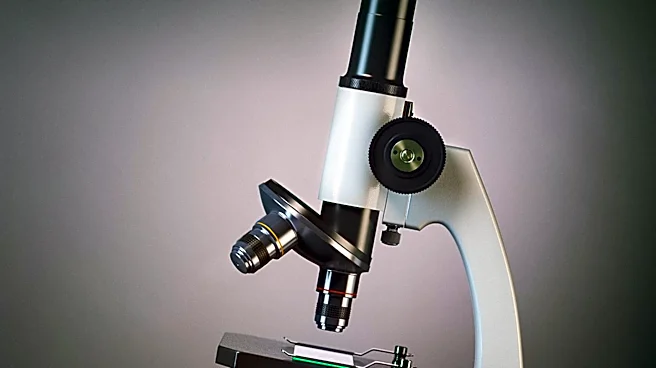
Researchers at Lawrence Berkeley National Laboratory (Berkeley Lab) and collaborating institutions have developed the Multimodal Optical Scope with Adaptive Imaging Correction (MOSAIC), a reconfigurable microscope that integrates over ten imaging techniques
into a single compact instrument. This new technology, featured on the cover of Nature Methods, allows scientists to observe biological processes across various scales and compare imaging methods on the same sample. MOSAIC generates massive datasets, up to four terabytes per hour, which necessitates advanced computational tools for processing and analysis. To address this, Berkeley Lab developed PetaKit5D, an open-source software toolkit capable of handling MOSAIC's output in real-time, significantly reducing processing costs. Two MOSAIC instruments at UC Berkeley are currently operating continuously to collect five-dimensional data (three spatial dimensions, time, and molecular identity) to train a new state-of-the-art AI model. This initiative aims to overcome the bottleneck in biological research, which has shifted from data acquisition to data processing and interpretation.
Why It's Important?
The development of MOSAIC and its accompanying AI model represents a fundamental shift in how biological research can be conducted. By enabling researchers to watch in vivo biochemistry unfold within living cells and organisms, this technology provides unprecedented insights into complex biological systems. The ability to track biological processes across different scales with minimal invasiveness and over long durations can lead to significant discoveries in various fields, including neurobiology and disease research. For instance, adaptive optics correction in MOSAIC has revealed 2.5 times more detectable neural calcium events than conventional microscopy, suggesting that previous methods may have significantly underestimated brain activity. This advancement is crucial for understanding diseases like Alzheimer's and for developing new therapeutic strategies. The integration of AI with advanced microscopy also paves the way for self-driving biological laboratories, which could dramatically accelerate the rate of scientific discovery and innovation in the U.S. and globally.
What's Next?
The immediate next step involves training a new state-of-the-art AI model using the continuous stream of five-dimensional data collected by the MOSAIC instruments at UC Berkeley. This AI model is envisioned as a vision language model that can reason natively over biological data, connecting visual observations with molecular identity, experimental context, and existing biological knowledge. The ultimate goal is for this AI to determine which observations are significant and which experiments should be prioritized. This capability, when connected to automated microscopes, sample handling, and perturbation systems, could form the foundation for self-driving biological laboratories. Such laboratories would fundamentally transform the pace of discovery by automating complex experimental workflows and data analysis, allowing researchers to focus on higher-level interpretation and hypothesis generation. The ongoing work at Berkeley Lab, supported by the U.S. Department of Energy’s Office of Science, will continue to push the boundaries of biological imaging and computational biology.
Beyond the Headlines
The ethical and philosophical implications of self-driving biological laboratories are profound. As AI takes on a more central role in scientific discovery, questions will arise regarding the nature of scientific intuition, creativity, and the role of human researchers. The ability of AI to autonomously design and execute experiments could lead to discoveries that are beyond current human conceptualization, potentially accelerating scientific progress at an unprecedented rate. However, it also raises concerns about the potential for unintended consequences, the need for robust validation of AI-driven findings, and the responsible governance of increasingly autonomous research systems. Furthermore, the massive data generation capabilities of MOSAIC highlight the growing challenge of data management and interpretation in scientific research, underscoring the critical need for advanced computational infrastructure and AI tools to extract meaningful insights from the deluge of information.