
What's Happening?
On January 7, 2026, U.S. officials announced the seizure of a Russian-flagged oil tanker, the Marinera, near Iceland. This action is part of Washington's ongoing efforts to block Venezuelan oil exports.
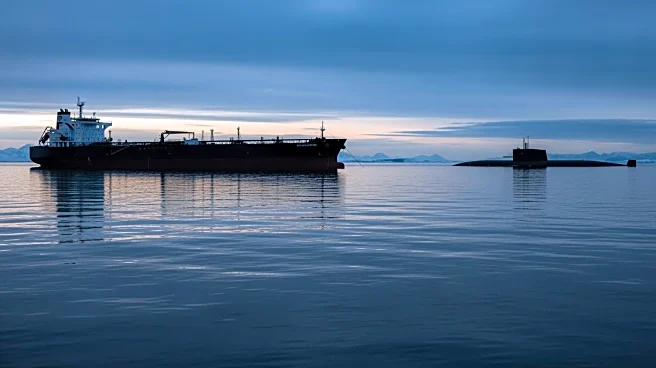
The tanker, previously known as Bella-1, was pursued for over two weeks across the Atlantic and was shadowed by a Russian submarine. The U.S. military's European Command confirmed the seizure, citing violations of U.S. sanctions. The operation involved the U.S. Coast Guard and special forces, who secured the vessel before leaving it under Coast Guard control. The U.S. Defense Secretary emphasized the continued enforcement of the blockade on sanctioned Venezuelan oil. Russian military vessels, including a submarine, were nearby during the operation, but no confrontation occurred. A senior Russian lawmaker condemned the seizure as piracy.
Why It's Important?
The seizure of the Russian-flagged oil tanker highlights the escalating tensions between the U.S. and Russia, particularly concerning sanctions and oil exports. This action underscores the U.S.'s commitment to enforcing sanctions against Venezuela, which could further strain U.S.-Russia relations. The involvement of Russian military vessels, although non-confrontational, indicates the potential for increased military posturing in international waters. The operation also reflects the U.S.'s strategic use of military and special forces to uphold international sanctions, which could impact global oil markets and diplomatic relations. The incident may provoke a response from Russia, potentially affecting geopolitical stability and international trade dynamics.
What's Next?
The seizure could lead to diplomatic protests from Russia and potential retaliatory measures. The U.S. may continue to monitor and intercept vessels linked to sanctioned countries, reinforcing its stance on international sanctions. The situation may prompt discussions within international forums regarding maritime security and the enforcement of sanctions. Additionally, the incident could influence future U.S. foreign policy decisions and military deployments in strategic regions. Stakeholders, including oil market participants and international diplomatic entities, will likely watch for any shifts in U.S.-Russia relations and their implications for global trade and security.