


What's Happening?
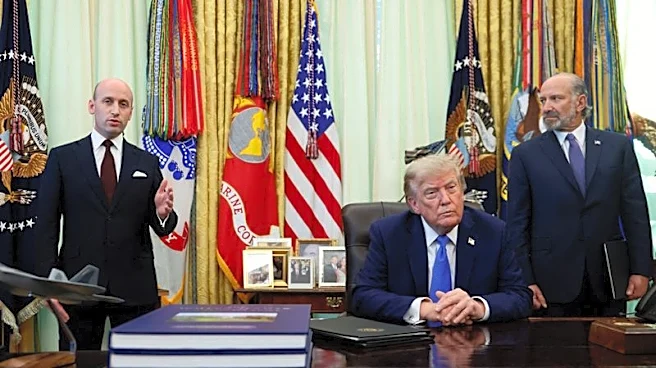
A new memo from the Department of Justice has granted President Donald Trump extensive authority to shield his communications with private advisers from Congress. The memo, issued by the DOJ's Office of Legal Counsel, asserts that executive privilege
can cover presidential communications with private advisers if they pertain to official decision-making and remain confidential. This development follows previous attempts by Trump to exert executive privilege over White House visitor logs and during the January 6 proceedings. The memo, signed by Attorney General T. Elliot Gaiser, broadly defines 'private advisers' to include individuals outside the Executive Branch, potentially complicating future congressional investigations.
Why It's Important?
The memo's implications are significant for the balance of power between the executive branch and Congress. By expanding the scope of executive privilege, the memo could limit congressional oversight and transparency, particularly in investigations involving the president. This development may affect future inquiries into Trump's administration, especially if Democrats regain control of Congress. The memo also raises concerns about the potential for executive overreach and the erosion of checks and balances in the U.S. government.
What's Next?
If Democrats regain control of Congress, they may challenge the memo's provisions and seek to subpoena communications covered by the expanded executive privilege. Legal battles could ensue, potentially reaching the Supreme Court, as lawmakers attempt to assert their oversight authority. The memo may also prompt discussions about the need for legislative reforms to clarify the limits of executive privilege and ensure accountability in government.