
What's Happening?
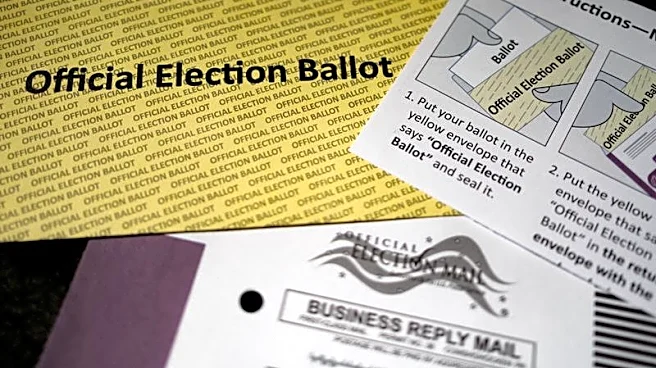
The Supreme Court has issued a preliminary ruling in favor of the Trump administration regarding an executive order aimed at limiting who can receive mail-in ballots for the 2026 midterm elections. The 6-3
decision, split along ideological lines, granted an emergency request from the government, lifting a June injunction imposed by a Massachusetts-based judge. This injunction had prevented key provisions of the executive order from taking effect in California and 22 other states that challenged it. The executive order seeks to create a federal list of eligible voters and direct the U.S. Postal Service to deliver ballots only to those individuals. While parts of the executive order remain blocked nationwide due to a subsequent ruling by the same judge, the Supreme Court's decision is expected to apply to that ruling as well, potentially allowing the administration to implement aspects of the order in the short term. The court's ruling emphasized that the lower court's injunction was premature, as federal agencies had not yet finalized implementation plans.
Why It's Important?
This Supreme Court decision is significant as it represents a temporary victory for the Trump administration in its efforts to exert greater control over mail-in voting, a practice President Trump has frequently criticized without evidence of widespread fraud. The ruling could influence the administration's ability to implement new regulations concerning mail-in ballots ahead of the 2026 midterm elections, potentially affecting voter access and the administration of elections in various states. States like California, led by Governor Gavin Newsom, have vowed to challenge the policy again, highlighting the ongoing legal and political battle over voting rights and election integrity. The case underscores the tension between federal and state authority in election oversight and the judiciary's role in mediating these disputes. The outcome could have implications for voter turnout and the perceived fairness of future elections, particularly given the partisan divide on mail-in voting policies.
What's Next?
Despite this preliminary win, the legal battle over the executive order is far from over. The Supreme Court's decision primarily addresses the prematurity of the lower court's injunction, leaving the door open for future judicial intervention once federal agencies, such as the U.S. Postal Service, finalize their implementation plans. New challenges are expected from states like California and New York, which have expressed strong opposition to the policy. The administration will likely proceed with efforts to implement the executive order, potentially leading to further legal challenges that will scrutinize the lawfulness and constitutionality of its provisions. The ongoing litigation will continue to shape the landscape of mail-in voting regulations, with potential impacts on voter registration, ballot distribution, and the overall conduct of the 2026 midterm elections. The final resolution of these legal disputes could significantly alter how Americans cast their votes.
Beyond the Headlines
This Supreme Court ruling delves into the deeper constitutional questions surrounding federal versus state control over election processes. While states traditionally manage elections, the executive order attempts to assert federal influence, raising concerns about potential voter disenfranchisement and the politicization of election administration. The dissent from Justices Sonia Sotomayor and Ketanji Brown Jackson highlights the perception that the majority's focus on technical legal arguments overlooks the broader implications of the Trump administration's actions on election integrity and public trust. This case is part of a larger national debate about voting access, election security, and the balance of power between different branches and levels of government. The long-term impact could be a redefinition of federal and state roles in elections, potentially leading to more centralized control or, conversely, a stronger defense of state autonomy in voting matters, with significant consequences for democratic participation.