
What's Happening?
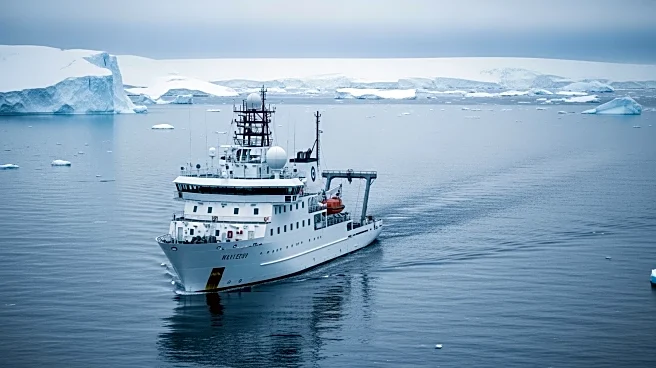
A researcher from the University of Minnesota has returned from an extensive expedition to Antarctica, where they collected ice samples believed to be millions of years old. This scientific endeavor aimed
to gather data that could provide insights into the Earth's climatic history. The samples were collected over several months in one of the most remote and challenging environments on the planet. The research is part of a broader effort to understand historical climate patterns and their implications for current and future climate change.
Why It's Important?
The collection of ancient ice samples is crucial for climate science as it offers a window into past atmospheric conditions. By analyzing these samples, scientists can reconstruct historical climate data, which is essential for understanding long-term climate trends and variability. This research can inform models that predict future climate scenarios, aiding policymakers and scientists in developing strategies to mitigate the impacts of climate change. The findings could have significant implications for environmental policy and global efforts to address climate change.
What's Next?
The next steps involve detailed analysis of the ice samples in specialized laboratories. Researchers will examine the trapped air bubbles and isotopic compositions to extract data on past temperatures and atmospheric gas concentrations. The results will contribute to a growing body of knowledge that supports climate modeling and prediction efforts. Additionally, the findings may be published in scientific journals, providing valuable information to the global scientific community and potentially influencing climate-related policy decisions.