









What's Happening?
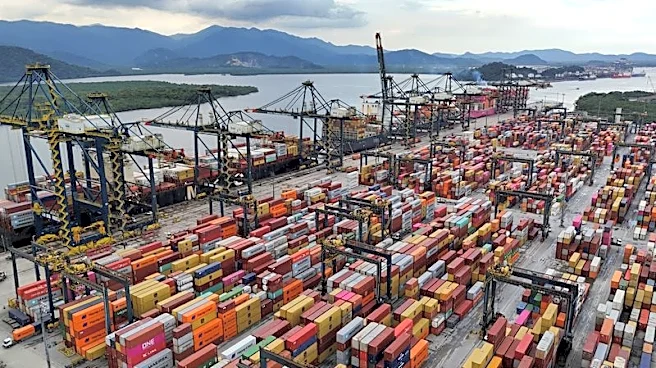
The Trump administration has announced a 25% tariff on Brazilian imports, set to take effect on July 22. This decision is part of a broader strategy to implement global tariffs, potentially affecting over 80 countries. The tariffs exclude certain Brazilian exports
like oil, gas, beef, coffee, and oranges. The move follows a Section 301 investigation under the Trade Act of 1974, citing issues with digital trade and market access. This development marks a continuation of strained trade relations between the U.S. and Brazil, with President Trump previously targeting Brazil over various trade disputes.
Why It's Important?
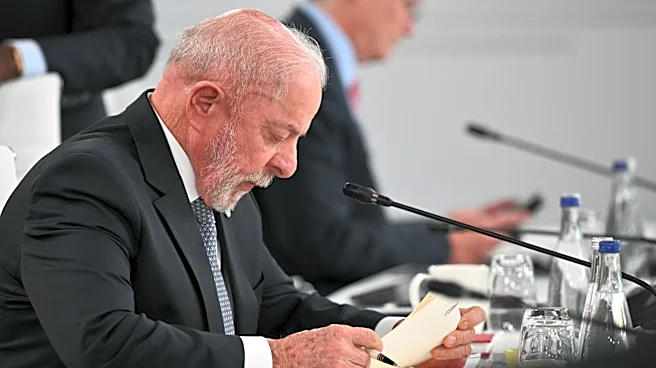
The imposition of tariffs on Brazil could have significant economic and political repercussions. Economically, it may disrupt trade flows and increase costs for U.S. importers relying on Brazilian goods. Politically, it could strain U.S.-Brazil relations, especially as Brazil's President Lula da Silva has criticized the tariffs as an attack on Brazil's sovereignty. The tariffs could also influence Brazil's domestic politics, potentially affecting upcoming elections. For the U.S., this move is part of a larger strategy to address perceived unfair trade practices, but it risks retaliatory measures from affected countries.
What's Next?
The tariffs are likely to prompt a response from Brazil, which may seek to impose reciprocal tariffs or challenge the U.S. actions through the World Trade Organization. The broader rollout of global tariffs could lead to increased tensions with other trading partners, potentially sparking a series of trade disputes. U.S. businesses and consumers may face higher costs, prompting calls for policy adjustments. The situation will require careful navigation to avoid escalating trade conflicts that could impact global economic stability.