





What's Happening?
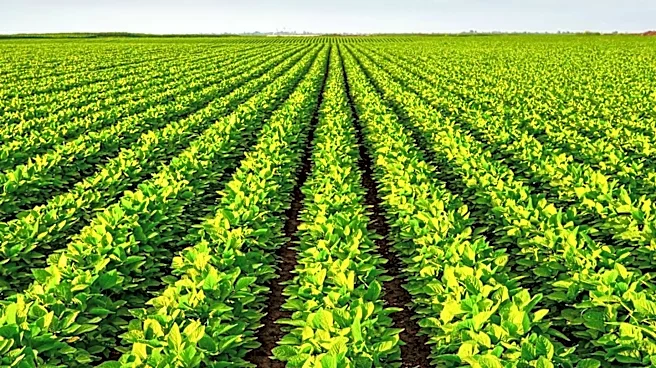
Chinese agricultural scientists have introduced a generative AI breeding platform, named Fengshu 2.0, for soybeans. This new platform aims to enhance the development of high-yield, high-oil soybean varieties within China. The initiative marks a significant
shift from traditional, experience-based breeding methods to a data-assisted and precision decision-making approach. The AI platform is designed to optimize breeding plans by streamlining the processing of research data, thereby improving efficiency. This development is part of China's broader effort to bolster its domestic soybean production and decrease its heavy reliance on imports, which currently account for over 80% of its total consumption. The country views this import dependency as a vulnerability, especially in the context of heightened geopolitical risks. While Chinese scientists have developed breakthrough varieties in the past five years, most have not yet reached large-scale commercial planting, and the nation's demand for soybean meal, a crucial animal feed, continues to rise due to increasing meat consumption among its 1.4 billion people.
Why It's Important?
This initiative is important for China's food security and its long-term agricultural strategy. By leveraging AI in soybean breeding, China aims to reduce its vulnerability to global supply chain disruptions and geopolitical tensions that could impact its access to essential agricultural commodities. A successful reduction in soybean imports would have significant economic implications, potentially shifting global trade dynamics for this crop. For the U.S., a major exporter of soybeans to China, this could mean a decrease in demand from its largest market, impacting American farmers and agricultural businesses. The move also highlights a broader trend of nations investing in advanced technologies like AI to achieve self-sufficiency in critical sectors. If China successfully scales up its domestic soybean production through AI-driven breeding, it could set a precedent for other countries to adopt similar strategies, further altering international agricultural trade patterns and potentially leading to increased competition in the global soybean market.
What's Next?
The immediate next steps involve the continued implementation and optimization of the Fengshu 2.0 AI platform. Researchers will focus on utilizing the platform to accelerate the development of new, superior soybean varieties. The critical challenge will be transitioning these new varieties from research and development to large-scale commercial planting. This will require significant investment in agricultural infrastructure, farmer education, and supply chain integration. The effectiveness of the AI platform will be measured by its ability to meaningfully curb China's reliance on imports in the coming years. International agricultural markets, particularly in the U.S. and Brazil, will closely monitor China's progress, as a significant reduction in Chinese soybean imports could necessitate adjustments in their export strategies and agricultural policies. The success of this AI-driven approach could also inspire other nations to invest more heavily in agricultural technology to enhance their food security.
Beyond the Headlines
Beyond the immediate economic and agricultural implications, China's deployment of AI in soybean breeding touches upon deeper themes of technological sovereignty and national resilience. This move underscores a strategic pivot towards leveraging advanced technology to address fundamental national security concerns, such as food supply. It also highlights the increasing integration of AI into traditional industries, demonstrating its potential to revolutionize sectors previously reliant on conventional methods. The ethical considerations surrounding AI in agriculture, such as data privacy, algorithmic bias in breeding selections, and the potential impact on biodiversity through the promotion of a few high-yield varieties, will become increasingly relevant. Furthermore, this initiative could accelerate a global 'tech race' in agricultural innovation, where nations compete to develop and deploy cutting-edge technologies to secure their food supplies, potentially leading to new forms of international cooperation or competition in agricultural science and technology.