





What's Happening?
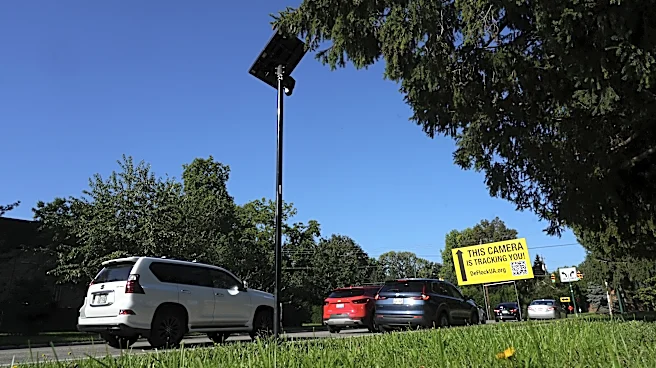
Senator Josh Hawley, a Missouri Republican, has introduced the Stop Flock Abuse Act, a bill designed to establish regulations for AI-powered surveillance technology, specifically automated license plate readers (ALPRs) like those produced by Flock. The
legislation aims to impose stricter limits on data collection, security, and search functions of these cameras, which are widely used by local governments, businesses, and law enforcement. The bill would prohibit local governments from selling or sharing vehicle data collected by these cameras and mandate the permanent deletion of driver data within 10 days, unless a criminal investigation is underway. Additionally, the proposed law would ban the use of facial recognition technology by surveillance networks and require written approval for searches, along with an audit log to track them. Data collected would also need to be encrypted and stored within the United States. This move follows an investigation launched by Senator Hawley into Flock and other surveillance technology companies, and a Senate Judiciary subcommittee hearing where executives from these companies declined to testify.
Why It's Important?
This legislation is significant because it addresses growing concerns about privacy and civil liberties in the age of advanced surveillance technology. The widespread deployment of AI-powered cameras, capable of creating digital footprints of everyday Americans, has raised questions about potential misuse and the erosion of constitutional rights. By proposing strict data retention limits, prohibiting data sharing, and banning facial recognition, the bill seeks to establish a federal framework for accountability and responsible data practices. The case of Lindsey Isaacs, who was wrongfully accused and jailed due to a misidentification by a Flock camera, highlights the real-world impact of these technologies and the need for safeguards. The bill's focus on preventing unauthorized searches and ensuring data encryption also aims to protect individuals from potential abuses and enhance data security. The debate surrounding this bill underscores the tension between public safety tools and individual privacy rights, a critical issue in modern society.
What's Next?
The Stop Flock Abuse Act will now proceed through the legislative process in Congress. It will likely undergo committee review, debates, and potential amendments before a vote. The bill's introduction could prompt further discussions among lawmakers, technology companies, and civil liberties advocates regarding the appropriate balance between surveillance capabilities and privacy protections. Other lawmakers, such as Senators Raphael Warnock and Katie Britt, have already expressed concerns and called for more guidance from the Department of Justice on preventing misuse of these cameras, indicating a broader interest in the issue. The outcome of this legislation could set a precedent for how AI-powered surveillance technologies are regulated at a federal level, potentially influencing state and local policies. Technology companies like Flock Safety, which has acknowledged the need for a federal framework, may engage in lobbying efforts or adapt their practices in anticipation of new regulations.
Beyond the Headlines
Beyond the immediate regulatory implications, this bill touches upon deeper ethical and societal questions regarding the role of artificial intelligence in public life. The concept of a 'digital footprint' created by constant surveillance raises concerns about the potential for pervasive tracking and profiling of citizens, even those not suspected of any wrongdoing. The legislation's emphasis on data residency within the United States also highlights national security considerations and the control over sensitive information. The debate surrounding AI-powered cameras reflects a broader societal challenge: how to harness technological advancements for public good while safeguarding fundamental rights and preventing dystopian outcomes. The bill could also influence the development and deployment of future AI technologies, pushing companies to integrate privacy-by-design principles from the outset. Ultimately, the success or failure of such legislation will shape the future landscape of privacy and surveillance in the digital age.