





What's Happening?
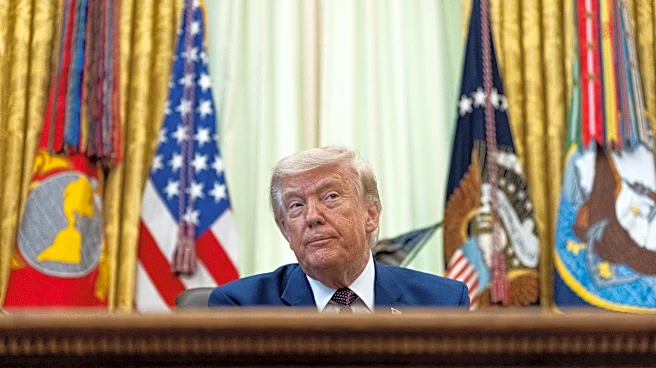
President Trump is transferring the management of federal student loans from the Department of Education to the Treasury Department. This move will involve defaulted borrowers being managed through the Treasury's 'Cross-Servicing program,' which employs
private contractors for debt collection. Notably, two of these contractors, Pioneer Credit Recovery and Transworld Systems, have previously faced legal action for 'misleading' and 'abusive' practices. The shift comes as student-loan defaults reach record highs, with over 10 million borrowers in default or delinquency. The Department of Education has paused involuntary collections, such as wage garnishment, while preparing for repayment changes. However, the timeline for resuming collections and the extent of involvement of these private collectors remain unspecified.
Why It's Important?
The transfer of student loan management to the Treasury Department could significantly impact borrowers, particularly those in default. The use of private collectors with a history of controversial practices raises concerns about increased collection fees and potential confusion for borrowers. Critics argue that the Treasury may lack the specific expertise needed to manage student loans effectively, potentially leading to poor coordination and increased risk of redefault. The decision to involve private collectors, previously criticized for their fee structures and practices, could exacerbate financial challenges for borrowers. This move highlights broader issues in student loan management and the need for effective oversight to protect borrowers' rights.
What's Next?
The Department of Education has not provided a specific timeline for the transfer to the Treasury, which will initially focus on defaulted borrowers before expanding to the broader loan portfolio. As the transition progresses, borrowers may face challenges in navigating the new system, particularly if coordination between agencies is lacking. The involvement of private collectors could lead to increased scrutiny from lawmakers and consumer protection agencies, potentially prompting calls for regulatory changes. Stakeholders, including education policy experts and borrower advocacy groups, are likely to monitor the situation closely to ensure borrower protections are upheld.