





What's Happening?
Scientists have developed a new method using physics-informed artificial intelligence (AI) to measure the speed of fluid flow in the brain, revealing a two-speed waste clearance system during sleep. This research, published in Science Advances, was conducted
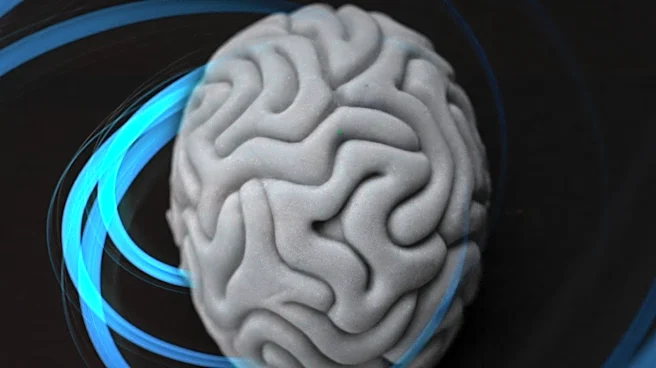
by a team from the University of Rochester, Brown University, and the University of Copenhagen. The study focuses on the glymphatic system, a brain-wide cleanup process that removes metabolic waste, including amyloid beta proteins associated with Alzheimer's disease, during deep sleep. The AI method extracts fluid flow speeds from magnetic resonance imaging (MRI) data, overcoming previous limitations in measuring such slow circulation in living brains. The findings indicate that fluid moves at a few microns per second in more open areas around the brain, but 50 times slower within deeper brain tissue.
Why It's Important?
This discovery is critically important for understanding and potentially treating neurodegenerative diseases like Alzheimer's in the U.S. The ability to accurately measure brain fluid flow in vivo provides a powerful new tool for researchers to investigate how the glymphatic system functions in both healthy and diseased brains. If this technique can be extended to humans, it could revolutionize early detection and intervention strategies for conditions where waste clearance is impaired, such as Alzheimer's, aging-related cognitive decline, and traumatic brain injury. For the U.S. healthcare system, this could lead to more precise diagnostics, personalized treatment approaches, and ultimately, improved patient outcomes and quality of life for millions affected by these debilitating conditions.
What's Next?
The research team is currently working to establish baseline measurements of brain fluid flow in animals to refine their AI tools. The long-term goal is to extend this technique to human subjects, allowing for comparisons between healthy and diseased brains, as well as young and old brains. This will enable scientists to investigate whether poor circulation in the brain is an early indicator of conditions like Alzheimer's or a consequence of traumatic brain injury. The development of this AI-powered MRI analysis could lead to new screening methods and therapeutic targets aimed at enhancing the brain's natural waste-clearing mechanisms, potentially staving off or mitigating the progression of neurodegenerative diseases.
Beyond the Headlines
Beyond its immediate medical applications, this research deepens our fundamental understanding of brain physiology and the critical role of sleep in maintaining brain health. It underscores the intricate biological processes that occur during sleep, highlighting its restorative functions beyond mere rest. The integration of AI with advanced imaging techniques represents a significant leap in neuroscience, demonstrating how interdisciplinary approaches can unlock previously inaccessible biological insights. This technological advancement could inspire similar AI-driven discoveries in other complex biological systems, pushing the boundaries of medical research and diagnostic capabilities. Ethically, as these technologies advance, discussions around data privacy and the implications of early disease prediction will become increasingly important.