

What's Happening?
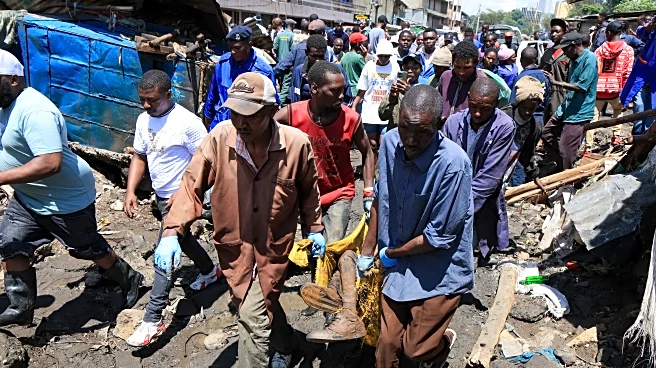
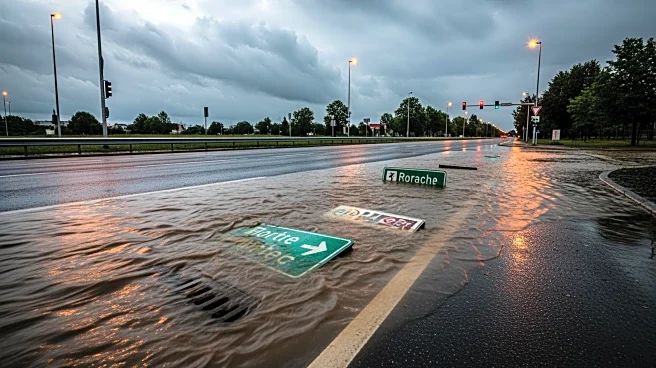
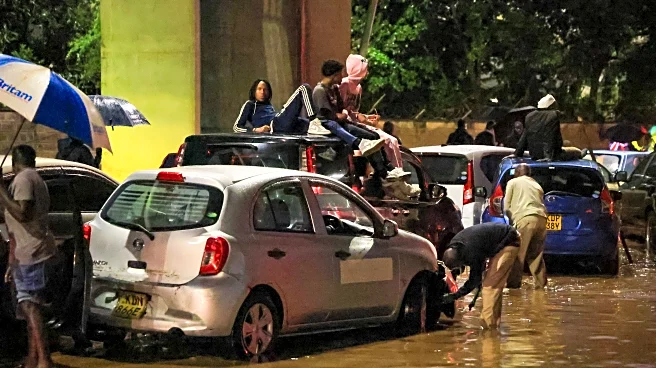
Nairobi, the capital of Kenya, has been severely affected by flash floods following heavy rains, resulting in at least 25 fatalities. The floods have caused significant disruptions, including the diversion of flights by Kenya Airways to Mombasa and the deployment
of military forces to assist in rescue operations. The heavy rains began on Friday, submerging vehicles and leaving motorists stranded. The local toll road operator has waived fees for an elevated road to aid in the situation. President William Ruto has announced that a multiagency team is working to relocate those in danger and that the government will cover hospital bills for those affected. The Kenya Red Cross and other emergency services are actively involved in rescue efforts, although they face challenges due to traffic and flooded roads.
Why It's Important?
The flash floods in Nairobi highlight the vulnerability of urban areas to extreme weather events, exacerbated by inadequate infrastructure. The situation underscores the need for improved urban planning and drainage systems to mitigate the impact of such natural disasters. The economic implications are significant, with disruptions to air travel and potential impacts on local businesses and daily life. The government's response, including the deployment of military and emergency services, reflects the severity of the situation and the need for coordinated disaster management strategies. The event also raises concerns about climate change and its role in increasing the frequency and intensity of such weather events.
What's Next?
As rescue operations continue, the focus will likely shift to recovery and rebuilding efforts. The government may face pressure to invest in infrastructure improvements to prevent future flooding. There may also be calls for increased climate resilience measures and policies to address the underlying causes of such extreme weather events. The international community and aid organizations might become involved in providing support and resources for recovery efforts. Additionally, there could be a push for greater public awareness and preparedness for natural disasters.