
What's Happening?
Gabriele Gravina has resigned as the head of Italy's football association (FIGC) following Italy's failure to qualify for the World Cup for the third consecutive time. Italy, a four-time World Cup champion, was defeated 4-1 on penalties by Bosnia-Herzegovina
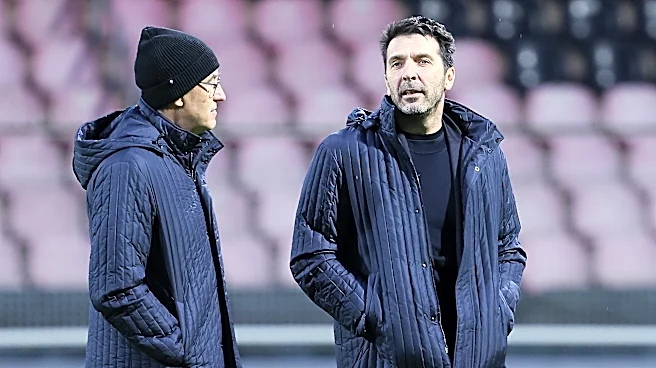
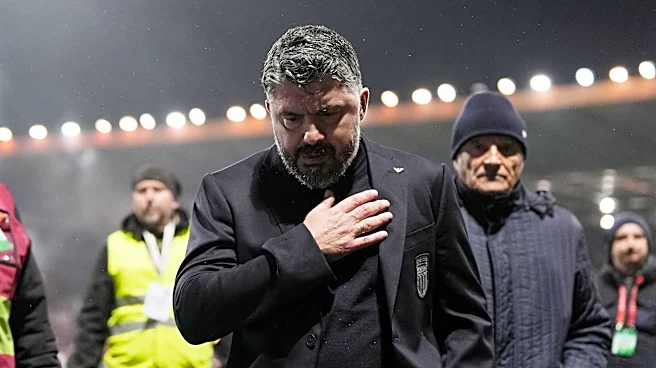
in the play-off final. This marks a historic low for the team, as no previous World Cup winner has missed three consecutive tournaments. Alongside Gravina, former goalkeeper Gianluigi Buffon also resigned from his role as delegation head. Buffon, who was part of Italy's 2006 World Cup-winning team, expressed that it was a responsible decision to step down following Gravina's resignation. Gravina, who took the position in October 2018, announced his resignation after a meeting at the FIGC's headquarters in Rome.
Why It's Important?
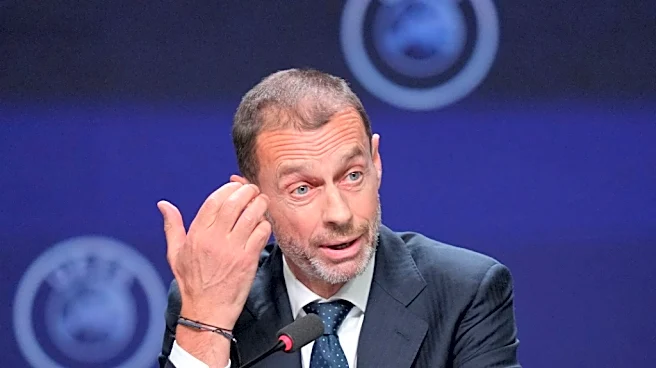
The resignation of Gabriele Gravina and Gianluigi Buffon highlights the ongoing challenges within Italian football, particularly in terms of leadership and performance on the international stage. Italy's repeated failure to qualify for the World Cup has significant implications for the country's football reputation and its economic interests tied to the sport. The inability to participate in such a prestigious tournament affects sponsorships, broadcasting rights, and the overall morale of Italian football fans. Additionally, UEFA President Aleksander Ceferin's warning about Italy potentially losing its role as a co-host for the European Championship in 2032 unless infrastructure improvements are made adds further pressure on the Italian football authorities to address these issues promptly.
What's Next?
Italy's football federation faces a critical period of restructuring and decision-making. The immediate task is to appoint new leadership that can guide the national team back to competitive success. Furthermore, Italy must address UEFA's concerns regarding its football infrastructure to retain its co-hosting rights for the 2032 European Championship. This involves upgrading stadiums and resolving disputes with public authorities to ensure compliance with UEFA's requirements. The coming months will be crucial for Italian football as it seeks to rebuild its reputation and competitiveness on the international stage.