


What's Happening?
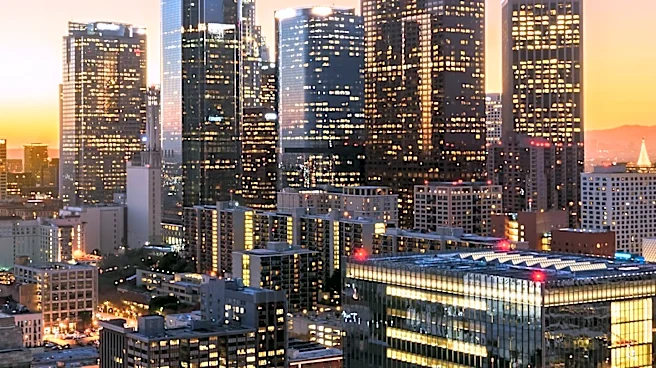
Jamison, Koreatown's largest commercial landlord, is actively converting vacant and underutilized office buildings in Koreatown and Westlake, Los Angeles, into residential apartments. This initiative is a direct response to the city's housing crisis and is facilitated
by the expanded Adaptive Reuse Ordinance, which now permits such conversions across the entire city, moving beyond its previous downtown-centric restrictions. The developer has already completed eight projects between 2013 and 2025, with two more recently opened, and several others under construction or proposed. In total, these projects could yield 3,652 apartments, though over 900 units are still in the proposal stage. Notable completed conversions include The Westmore, Crosby, and Atlas House, while projects like Grayson and Mason have recently opened. Construction is underway for the Walker project, which will be Jamison's largest office-to-housing conversion in the area, creating 507 apartments.
Why It's Important?
This trend of converting commercial spaces into residential units is crucial for addressing the severe housing shortage in Los Angeles. By repurposing existing structures, the city can rapidly increase housing stock without requiring new ground-up construction, which has become increasingly challenging due to financing and other obstacles. The Adaptive Reuse Ordinance's expansion is a significant policy shift, potentially unlocking over 43,000 new homes across the city. This approach not only provides much-needed housing but also revitalizes urban areas by transforming empty office buildings—a common issue in the post-pandemic work-from-home era—into vibrant residential communities. It offers a sustainable and efficient solution to urban development, reducing urban sprawl and utilizing existing infrastructure. The success of Jamison's projects could serve as a model for other developers and cities facing similar housing and commercial vacancy challenges.
What's Next?
Jamison has filed plans for three additional office conversions, though their construction status is yet to be confirmed by city records. These proposed projects include Wilshire Park Place, which aims to convert an 11-story office tower into 370 apartments, and two other conversions near Lafayette Park, potentially adding 141 and 428 apartments respectively. The city will continue to process permits and approvals for these and future projects under the expanded Adaptive Reuse Ordinance. The ongoing success and completion of these conversions will likely influence further policy decisions and incentives for similar developments. Stakeholders, including city officials, housing advocates, and other developers, will closely monitor the progress and impact of these initiatives, potentially leading to more widespread adoption of adaptive reuse strategies across Los Angeles and other U.S. cities.
Beyond the Headlines
The conversion of office buildings into residential units represents a broader paradigm shift in urban planning and real estate development, driven by changing work patterns and the persistent demand for housing. This trend highlights the adaptability of urban infrastructure and the potential for creative solutions to complex societal problems. Beyond simply providing housing, these projects can foster mixed-use neighborhoods, reduce commute times, and contribute to a more sustainable urban environment by minimizing new construction and maximizing the use of existing resources. However, challenges may include ensuring the structural integrity and habitability of older buildings, addressing potential gentrification concerns, and integrating new residential communities into existing commercial zones. The long-term success will depend on careful planning, community engagement, and continued policy support to ensure these conversions genuinely benefit all residents.