






What's Happening?
The trial of Jason Eaton, accused of shooting three Palestinian students in Burlington in November 2023, commenced in Chittenden Superior Court. Eaton has pleaded not guilty to three counts of attempted second-degree murder. The three victims, Hisham
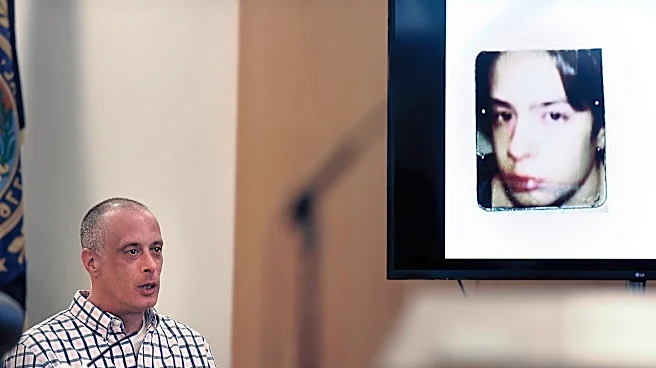
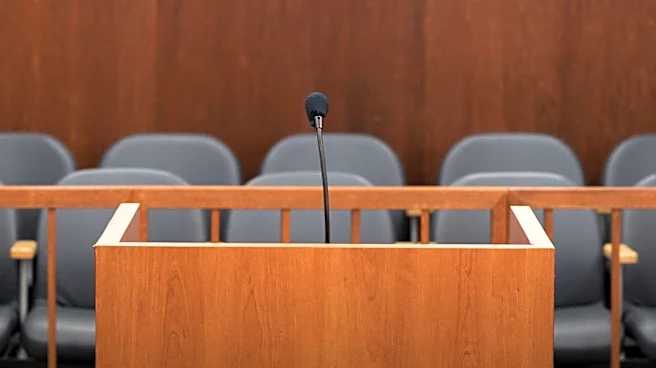
Awartani, Kinnan Abdalhamid, and Tahseen Ali Ahmad, testified on the first day of the trial. They recounted being approached by Eaton on North Prospect Street while speaking a mix of English and Arabic, with two of them wearing keffiyehs, before he allegedly opened fire without warning. Awartani, who was shot in the spine, was left paralyzed from the waist down, while Abdalhamid was shot in the glute and Ali Ahmad in the upper chest. Eaton's defense attorneys plan to argue that he was legally insane at the time of the shooting, claiming he believed he was acting under orders from the CIA or God due to delusions. Prosecutors, however, intend to present expert testimony to refute the insanity defense, urging the jury to critically examine Eaton's justification.
Why It's Important?
This trial holds significant importance due to the nature of the alleged crime and its broader implications. The shooting, which occurred approximately a month after the start of the conflict in Gaza, garnered national and international attention, highlighting concerns about hate crimes and the safety of minority groups in the U.S. The outcome of this trial could set a precedent for how mental health defenses are weighed in cases involving alleged politically or ethnically motivated violence. The victims' testimony provides a direct account of the traumatic event, emphasizing the severe physical and psychological impact on individuals targeted in such incidents. The legal battle over Eaton's sanity will also contribute to ongoing discussions about the intersection of mental health, criminal responsibility, and public safety within the justice system.
What's Next?
The trial is expected to continue for approximately one week, with proceedings resuming on Tuesday morning. Both the prosecution and the defense will present further evidence and expert testimonies. The defense will likely introduce expert witnesses to support their claim of Eaton's legal insanity, while prosecutors will counter with their own experts to challenge this assertion. The jury will be tasked with evaluating the evidence presented by both sides, including the victims' accounts and the expert opinions on Eaton's mental state, to determine his guilt or innocence. The judge has already taken steps to ensure a fair trial by ordering spectators to remove keffiyehs, citing concerns that such displays could influence the jury. The verdict will have significant consequences for Eaton, who faces a potential life sentence if convicted, and will be closely watched by communities concerned with justice and intergroup relations.
Beyond the Headlines
Beyond the immediate legal proceedings, this case touches upon deeper societal issues, including the rise of politically charged violence and the challenges of addressing mental health within the criminal justice system. The alleged targeting of Palestinian students, particularly in the context of global events, underscores the vulnerability of certain communities to hate-motivated acts. The defense's reliance on an insanity plea raises complex ethical and legal questions about culpability when mental illness is a factor. It also highlights the need for a nuanced understanding of mental health conditions and their potential role in violent behavior, as well as the societal responsibility to provide adequate mental healthcare and prevent such incidents. The trial's outcome could influence public discourse on these sensitive topics and potentially impact how similar cases are handled in the future, emphasizing the ongoing struggle to balance justice with compassion and understanding.