







What's Happening?
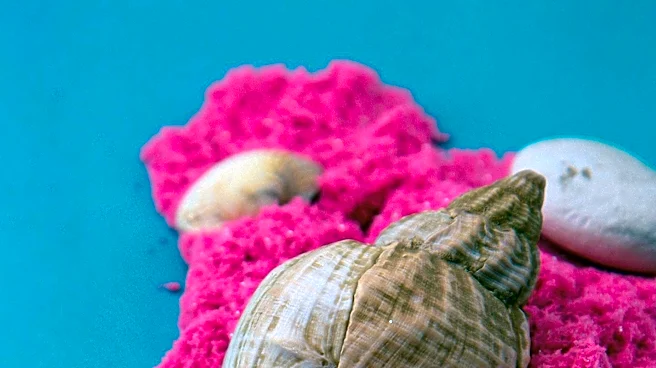
A study led by scientists at the University of Tartu reveals that approximately 470 million years ago, empty mollusc shells began serving as habitats for small sea creatures, marking a significant ecological shift in ocean ecosystems. During the Middle
Ordovician, animals started inhabiting the spacious shells of dead nautiloids, ancient cephalopods, and later spread to smaller shells of snails and clams. This development led to densely packed communities within shells, consisting of filter-feeders like bryozoans and sponges. The study highlights how shell shape influenced the size and diversity of resident communities, with nautiloid shells offering better living conditions due to their open chambers.
Why It's Important?
The colonization of empty shells by marine life during the Ordovician Period represents a major ecological innovation, contributing to the evolution of modern ocean ecosystems. This shift allowed for increased biodiversity and the development of complex marine communities. Understanding these ancient ecological changes provides insights into the adaptive strategies of early marine organisms and the factors driving biodiversity. The study underscores the importance of small ecological innovations in shaping the history of life on Earth, offering a deeper understanding of marine evolution and ecosystem dynamics.