






What's Happening?
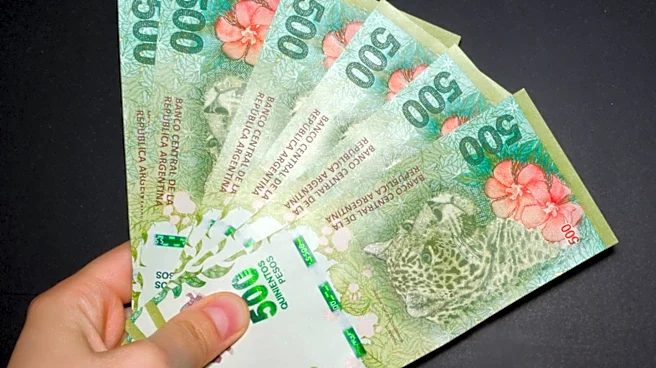
Argentina has halted the sale of dollar-denominated debt in its local market for two months, marking the longest pause since the Bonar dollar bond program was launched in February. This decision comes as borrowing costs have surged, with yields on these
bonds increasing by over 500 basis points to more than 12 percent. The suspension complicates Argentina's efforts to meet substantial debt payments totaling billions of dollars next year. The government had initially planned to sell nearly another US$1 billion in the local market this year, followed by an additional US$5 billion in 2027. Economy Minister Luis Caputo acknowledged that while the government still expects to issue local bonds next year, it is considering tapping a currency swap with China as an alternative if it cannot do so. This situation is exacerbated by soaring borrowing costs in global markets, which have diminished any hopes of a first-time bond sale abroad.
Why It's Important?
This pause in local dollar bond sales carries significant implications for Argentina's financial stability and its ability to manage its substantial debt obligations. The country faces approximately US$25 billion in hard-currency debt payments next year, part of a heavier maturity schedule extending through 2030. The government's original strategy to meet these obligations relied on a combination of Central Bank dollar purchases, privatizations, multilateral financing, and local issuance. The weakening of the local issuance pillar now places increased pressure on the remaining financing sources. The surge in borrowing costs reflects growing investor concern, particularly regarding the upcoming 2027 election and the potential for a shift away from President Javier Milei's pro-market policies. This uncertainty is evident in the widening yield gap between local dollar bonds maturing before and after the election, indicating a clear distinction in investor confidence.
What's Next?
Argentina's immediate next steps involve navigating its upcoming debt maturities without the expected local bond sales. Economy Minister Luis Caputo has indicated that the government might utilize its US$19-billion swap line with China's central bank, which includes about US$5 billion available for debt repayment, roughly matching the amount planned for local dollar bonds next year. However, this swap provides yuan to Argentina's Central Bank rather than direct dollars to the Treasury, and its terms are not fully public, making it a less straightforward replacement for dollar bonds. The government will also continue to pursue other financing avenues, such as Central Bank dollar purchases and privatizations. The political landscape, particularly the lead-up to the 2027 presidential elections, will heavily influence investor sentiment and the government's ability to secure financing. The market will closely watch for any signs of increased dollar reserves and the government's success in managing its debt wall.
Beyond the Headlines
The current financial predicament in Argentina highlights the intricate interplay between economic policy, political stability, and investor confidence in emerging markets. The government's decision to forgo bond sales due to high yields, despite facing a looming debt wall, underscores a difficult balancing act between short-term fiscal prudence and long-term financing needs. This situation could trigger broader discussions about the sustainability of debt in developing nations and the role of international financial institutions and bilateral agreements, such as the China swap line, in providing alternative financing. The 'election jitters' and the widening yield gap between pre- and post-election bonds reveal a deep-seated market skepticism about policy continuity, which is a common challenge in politically volatile environments. This scenario could also prompt a re-evaluation of risk assessment models for emerging market debt, potentially leading to higher borrowing costs for other countries perceived to have similar political and economic uncertainties.