






What's Happening?
President Trump's recent criticisms of Italy's Prime Minister Giorgia Meloni have led to an unexpected rallying of European leaders around Meloni. Trump's questioning of Italy's reliability as a wartime ally and his claims about Meloni's political actions
have prompted European leaders to support her, despite her hard-right political roots. This development has resulted in a thawing of previously frosty relations between Meloni and other European leaders, who are now finding more reasons to coordinate on defense, tariffs, and foreign policy. This shift is occurring as Europe faces multiple global crises, including wars in Ukraine and Iran, a trade deficit with China, and threats from Russia. Analysts suggest that Trump's preference for negotiating with European countries individually is being undermined by this newfound European unity.
Why It's Important?
The rallying of European leaders around Giorgia Meloni signifies a shift in European politics, where leaders are increasingly coordinating to maintain their global standing amidst pressures from the U.S. and China. This unity could impact U.S. foreign policy, as European countries may present a more united front in negotiations, reducing President Trump's leverage. The situation also highlights the potential political costs for European leaders closely aligned with Trump, as seen in Hungary's recent elections. This development underscores the complex dynamics of international relations, where domestic political actions can have far-reaching global consequences.
What's Next?
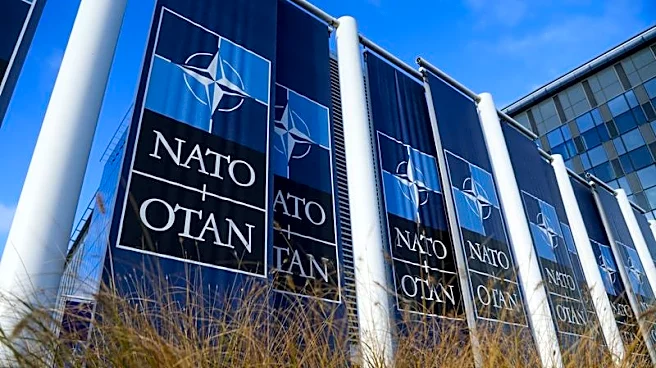
The newfound unity among European leaders will be tested at the upcoming NATO summit in Turkey. European leaders are likely to continue strengthening their ties, potentially leading to more coordinated policies on defense and trade. This could result in a more cohesive European stance in international forums, challenging the U.S.'s traditional influence. Additionally, as European elections approach, leaders may further distance themselves from Trump to align with domestic public opinion, which could reshape alliances and diplomatic strategies.