



What's Happening?
The ongoing conflict involving the US and Iran is significantly impacting global energy and financial markets. The situation has reignited debates over the balance between renewables and fossil fuels in national energy strategies. The conflict has led
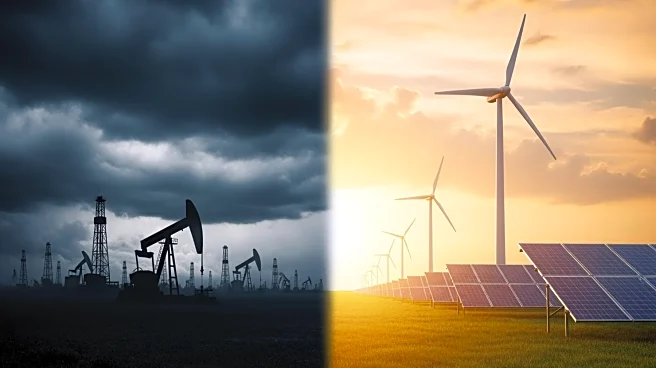
to disruptions in oil and natural gas markets, with significant impacts on prices and supply chains. Despite these challenges, renewables like solar and wind continue to grow rapidly in the US, driven by decreasing costs and increasing demand for clean energy. The Center for Strategic and International Studies highlights a new energy investment paradigm characterized by fragmentation and strategic competition, particularly between the US and China.
Why It's Important?
The conflict underscores the vulnerabilities of relying heavily on fossil fuels, prompting a reevaluation of energy strategies. The rise in gas prices and disruptions in oil supply chains highlight the need for a diversified energy mix that includes a significant share of renewables. The ongoing shift towards renewable energy is not only a response to environmental concerns but also a strategic move to enhance energy security and economic stability. As renewables become more cost-effective, they offer a viable alternative to fossil fuels, potentially reshaping global energy investment flows and reducing geopolitical risks associated with energy dependence.