
What's Happening?
Astronomers have identified a significant increase in the number of hydrogen gas clouds surrounding galaxies, according to a new study. Previously, only about 3,000 such gas halos were detected, but recent
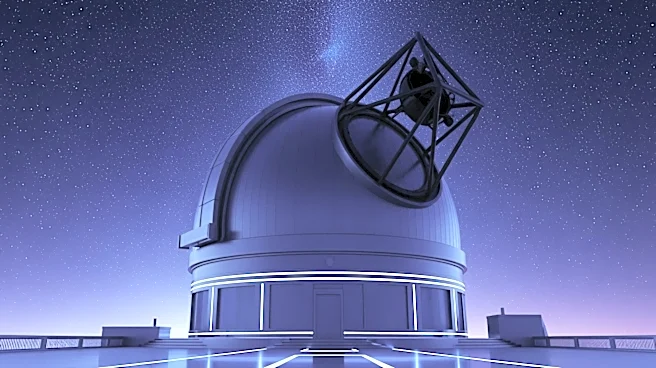
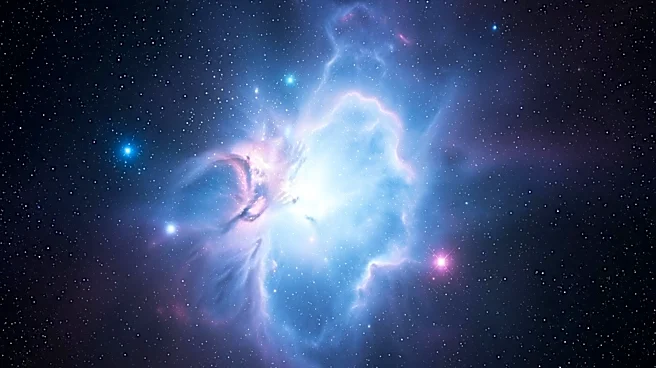
research has increased this number to over 33,000. These findings provide a more comprehensive dataset for studying the formation and evolution of early galaxies. The study utilized the Hobby-Eberly Telescope at the McDonald Observatory in Texas, capturing nearly half a petabyte of data. This data revealed new hydrogen gas halos, some of which are simple, football-shaped clouds around a single galaxy, while others are large, irregular structures containing multiple galaxies. The discovery is crucial as hydrogen is the main ingredient for star formation, and understanding its distribution helps in comprehending the universe's early development.
Why It's Important?
The discovery of these additional hydrogen gas clouds is significant for astrophysics as it fills gaps in the understanding of galaxy formation and evolution during the 'cosmic noon' period, approximately 10 to 12 billion years ago. This period was marked by peak star formation, requiring vast amounts of hydrogen. The new data allows scientists to refine existing models of galaxy formation, potentially leading to new insights into the physics and mechanics of the early universe. This research could also impact future studies on the distribution of matter in the universe and the processes that govern star and galaxy formation.
What's Next?
Researchers plan to study the newly discovered hydrogen gas halos in greater detail to better understand the sources of the universe's 'missing' hydrogen. This could involve focusing on individual halos to examine their physics and mechanics more closely. The findings may lead to adjustments in current models of galaxy formation, providing a more accurate picture of the early universe. Continued observations and data analysis will be essential in uncovering further details about these gas clouds and their role in cosmic evolution.