



What's Happening?
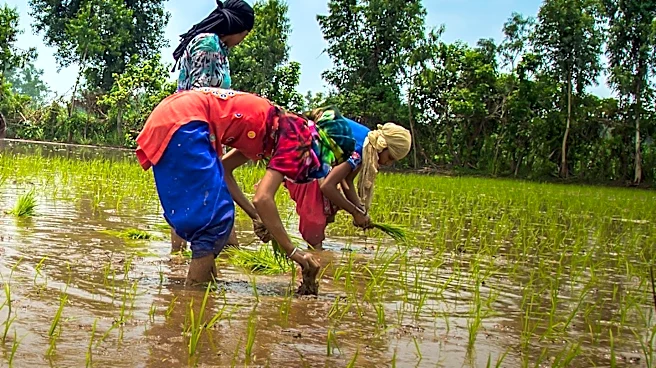
The Gender Action Learning System (GALS) approach in Malawi is empowering women and marginalized farmers by transforming household gender dynamics. This initiative ensures equitable access to resources and decision-making power, facilitating the adoption
of climate-smart agricultural practices. The GALS approach has been tailored to support the uptake of conservation agriculture and irrigation technology, engaging men and traditional leaders to promote sustainable farming practices. This has significantly boosted food security and shared agency across thousands of households.
Why It's Important?
The GALS approach is crucial as it addresses gender inequality in agriculture, a significant barrier to sustainable development. By empowering women and ensuring equitable resource distribution, the initiative enhances food security and resilience against climate change. The success in Malawi serves as a model for other regions, demonstrating the importance of inclusive agricultural practices. As climate change continues to impact global food systems, approaches like GALS are essential for building resilient and equitable agricultural communities.
What's Next?
The GALS methodology is expanding beyond Malawi, with government departments and NGOs incorporating it into official agricultural guidelines. The approach is being adopted in Zambia, Zimbabwe, and even in aquaculture value chains in Malaysia. This expansion indicates a growing recognition of the importance of addressing household power dynamics in building sustainable food systems. As the methodology spreads, it is expected to further enhance food security and gender equality in agriculture.