



What's Happening?
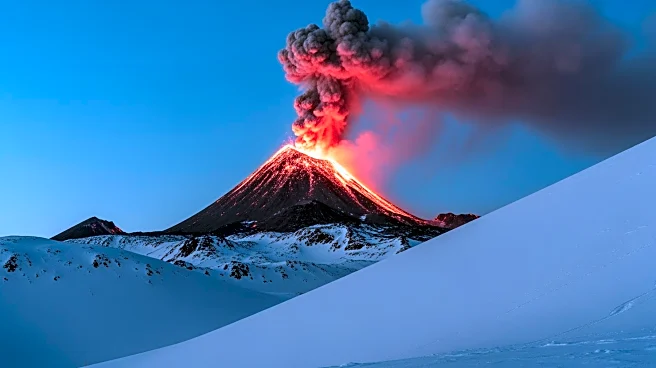
Mount Etna, located in Sicily, erupted on December 27, sending huge plumes of ash and smoke into the sky. The eruption occurred as skiers were using the slopes below, creating a dramatic scene. The Istituto Nazionale di Geofisica e Vulcanologia reported
intensified volcanic activity, with craters continuously emitting ash. In response to the eruption, scientists issued a red Volcano Observatory Notice for Aviation, the highest alert level. Despite this, authorities stated that flights at a nearby airport would continue to operate normally unless ashfall increased.
Why It's Important?
The eruption of Mount Etna is significant due to its potential impact on local tourism and aviation. Sicily is a popular destination for tourists, and the eruption could deter visitors, affecting the local economy. Additionally, the aviation alert highlights the potential for disruptions in air travel, which could have broader implications for international travel and logistics. The situation underscores the challenges of managing natural disasters in regions that rely heavily on tourism and transportation.
What's Next?
Authorities will continue to monitor the volcanic activity closely. If ashfall increases, it could lead to flight cancellations or delays, affecting travelers and local businesses. The situation may also prompt discussions on improving disaster preparedness and response strategies in volcanic regions. Local governments and tourism operators may need to develop contingency plans to mitigate the economic impact of such natural events.