




What's Happening?
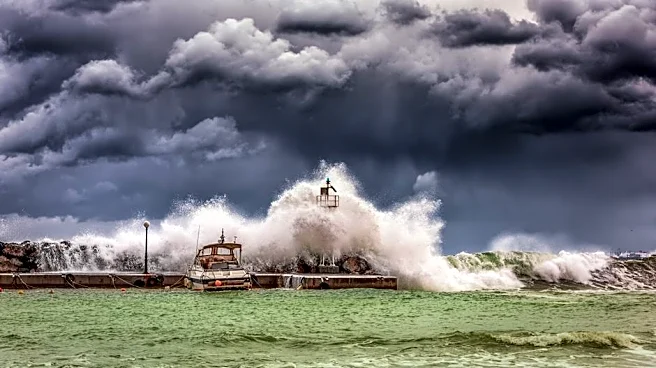
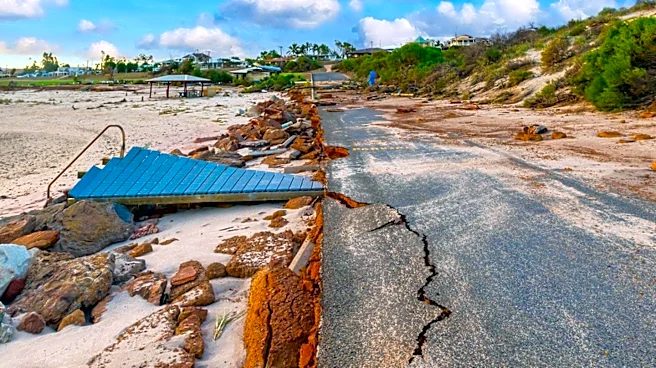
Powerful El Niño-driven storms have battered multimillion-dollar beachfront homes in Seal Beach, California, causing significant damage and prompting a major cleanup effort. Despite city officials' proactive measures, including reinforcing sand barriers
and inspecting drainage systems, the ocean breached defenses, leading to widespread flooding. This event follows previous damage in October to the Long Beach Peninsula, which was impacted by powerful waves and high surf fueled by Pacific storms and Tropical Storm Rachel. The current onslaught has raised fears of further flooding, especially with unusually high 'king tides' anticipated during Thanksgiving week, from November 22 through November 27. Coastal communities are bracing for continued destructive surf, erosion, and flooding throughout what is expected to be a historically strong El Niño winter.
Why It's Important?
The devastation in Seal Beach highlights the increasing vulnerability of coastal properties in California to extreme weather events, particularly those exacerbated by El Niño. The financial implications are substantial, affecting homeowners with multimillion-dollar properties and potentially leading to increased insurance costs and demands for public infrastructure investment. The repeated breaches of protective barriers, despite municipal efforts, underscore the challenges faced by local governments in safeguarding coastal communities. This situation also raises questions about the long-term sustainability of beachfront development and the economic viability of maintaining such properties in the face of escalating climate-related risks. The impact extends beyond property damage, affecting local economies reliant on tourism and coastal recreation.
What's Next?
City officials in Seal Beach have warned residents of impending 'king tides' from November 22 to November 27, urging homeowners to secure outdoor belongings, clear drainage areas, and utilize free sandbags for protection. Further south, a significant crack has appeared in a coastal bluff beneath The Ritz-Carlton, Laguna Niguel, in Dana Point, raising concerns about potential collapse onto a popular beachside trail. Heavy rain and powerful surf could worsen this fissure, saturating the soil and eroding the bluff's base. Authorities have not yet confirmed the structural integrity of the luxury resort or the depth of the fracture. Coastal communities across California are preparing for a potentially historic El Niño winter, anticipating more destructive surf, erosion, and flooding in the coming months.
Beyond the Headlines
The ongoing coastal erosion and property damage in California due to El Niño-fueled storms point to a broader environmental and policy challenge. The vulnerability of high-value beachfront properties raises ethical questions about who bears the cost of protecting private assets from natural disasters, and whether public funds should be used for such endeavors. Legally, these events could trigger debates over land use regulations, building codes in coastal zones, and the responsibilities of property owners versus local governments. Culturally, the allure of coastal living is being confronted by the harsh realities of climate change, potentially leading to shifts in residential patterns and a reevaluation of the perceived value of oceanfront real estate. The long-term implications include potential population displacement, significant ecological changes to coastal ecosystems, and a redefinition of sustainable development practices along the U.S. coastline.