




What's Happening?
Chinese President Xi Jinping recently defended Latin America’s “independence and self-reliance” during discussions with Ecuadorian President Daniel Noboa in Beijing. Xi emphasized that countries in the region should have the freedom to forge international
partnerships based on their own interests. He stated that Latin America and the Caribbean should remain a “zone of peace” and that outside powers should not meddle with the region’s development or its choices regarding diplomatic and economic partners. While Xi did not explicitly name the United States, his remarks come amidst increasing competition for influence between Beijing and Washington across Latin America, particularly in sectors such as trade, telecommunications, energy, and infrastructure. The meeting between Xi and Noboa resulted in approximately $42.7 million in non-repayable Chinese cooperation funds for Ecuador, with allocations for police cars, healthcare improvements, economic recovery programs, education, production, and disaster prevention projects. The two nations also agreed to expand cooperation in the digital economy, renewable energy, and climate monitoring, including an AI-supported weather system.
Why It's Important?
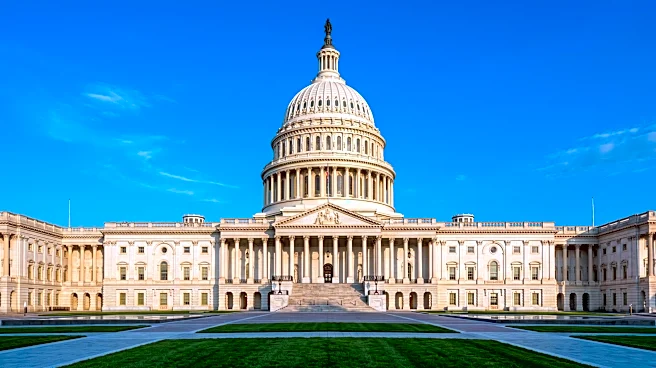
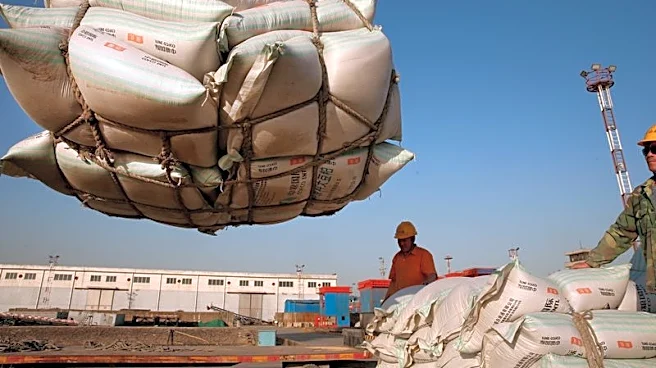
This development highlights the intensifying geopolitical competition between China and the United States for influence in Latin America. China's emphasis on 'independence and self-reliance' directly challenges the U.S.'s traditional role and influence in the region, particularly as the U.S. administration has been pushing regional governments to limit Chinese participation in sensitive industries. For the U.S., this signifies a potential erosion of its economic and strategic leverage in its own hemisphere. China's approach, offering significant financial aid and cooperation in critical sectors like renewable energy and AI, presents an attractive alternative for Latin American nations seeking development partners. The restoration of export authorization for Ecuadorian shrimp-processing plants and the increase in trade between China and Ecuador underscore China's growing economic ties and influence, potentially shifting trade dynamics away from traditional U.S. partners. This competition could lead to a more complex and multipolar regional landscape, where Latin American countries may increasingly balance their relationships between the two global powers.
What's Next?
The ongoing competition between China and the United States for influence in Latin America is expected to intensify. The U.S. will likely continue to press Central and South American governments to scrutinize Chinese involvement in critical infrastructure and sensitive industries. Conversely, China will likely continue to present itself as a partner that respects national sovereignty and offers substantial economic and technological cooperation without political preconditions. Latin American countries will face increasing pressure to navigate these competing interests, potentially leading to a more diversified set of international partnerships. Future engagements between Chinese and Latin American leaders will likely focus on expanding trade agreements, infrastructure development, and technological collaborations, further solidifying China's presence. The effectiveness of China's 'cultural diplomacy' and economic incentives in swaying regional allegiances will be a key indicator of future geopolitical shifts in the Americas.
Beyond the Headlines
Beyond the immediate economic and political implications, China's strategy in Latin America, as articulated by President Xi, carries deeper implications for the global order. By advocating for 'independence and self-reliance' and framing its engagement as non-interference, China is subtly challenging the long-standing Monroe Doctrine and the U.S.'s historical dominance in the region. This narrative positions China as a champion of developing nations' autonomy, potentially resonating with countries wary of perceived Western hegemony. The focus on cultural exchange and shared civilizational values, as seen in other diplomatic efforts, aims to build long-term relationships based on mutual respect rather than transactional interests. This approach could foster a new geopolitical paradigm where economic partnerships are increasingly decoupled from traditional political alignments, leading to a more fragmented and complex international system. The ethical dimension lies in whether China's non-interference pledge truly translates into equitable partnerships or if it merely serves as a strategic tool to expand its global influence.