





What's Happening?
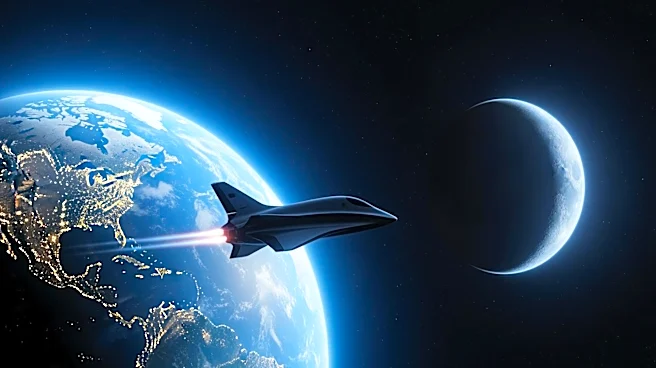
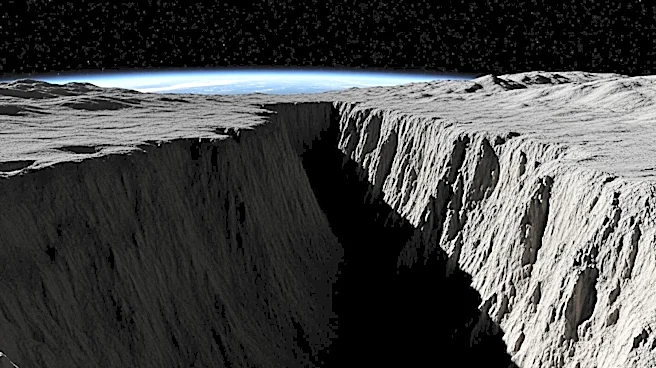
NASA's Artemis II mission, involving a crew of three Americans and one Canadian, is currently en route to the Moon. The mission, which launched on April 1, 2026, aims to photograph the Moon's far side and break distance records for human spaceflight.
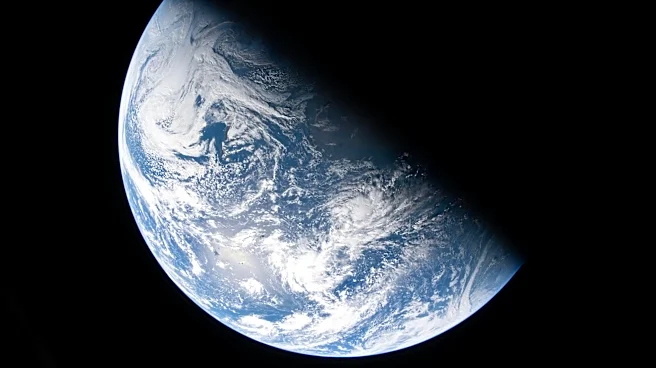
The crew, traveling aboard the Orion spacecraft, includes Canada's Jeremy Hansen and Americans Victor Glover, Reid Wiseman, and Christina Koch. They are the first humans to travel towards the Moon since the Apollo 17 mission in 1972. Recently, NASA shared an image captured by the crew, showcasing the Orientale Basin on the lunar disk, a feature never before seen by human eyes. The mission is set to conclude with a Pacific Ocean splashdown on April 10, 2026, and is part of NASA's broader goal to land astronauts near the lunar south pole by 2028.
Why It's Important?
The Artemis II mission represents a significant milestone in human space exploration, marking the first crewed lunar mission in over 50 years. By photographing the Moon's far side, the mission contributes to scientific understanding and prepares for future lunar landings. The mission's success could pave the way for NASA's goal of establishing a sustainable human presence on the Moon, which is crucial for future exploration missions, including potential manned missions to Mars. The mission also demonstrates international collaboration in space exploration, with Canadian astronaut Jeremy Hansen participating alongside American astronauts.
What's Next?
Following the completion of the Artemis II mission, NASA plans to continue its Artemis program with the goal of landing astronauts on the Moon by 2028. The data and experience gained from Artemis II will inform the planning and execution of future missions, including Artemis III, which aims to land astronauts near the Moon's south pole. This region is of particular interest due to the potential presence of water ice, which could support long-term human habitation and serve as a resource for future missions. The success of Artemis II will also bolster international partnerships and inspire further investment in space exploration technologies.