






What's Happening?
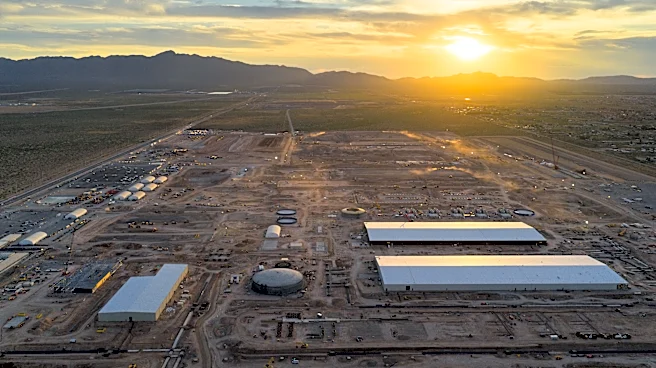
Representative Marcy Kaptur (D-OH), who represents Ohio's 9th Congressional District, has launched an attack against her Republican challenger regarding his support for data centers. This move is part of a broader trend observed in the 2026 elections
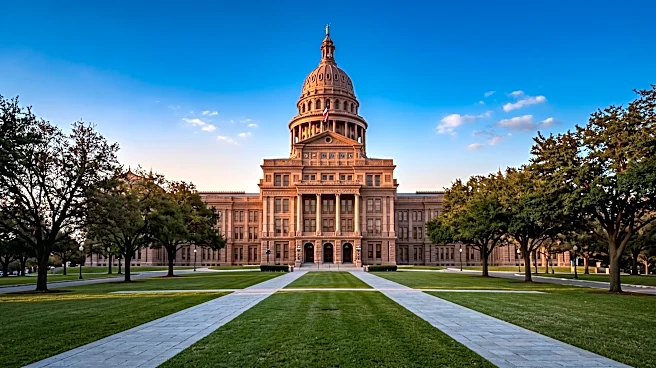
where data centers have become a significant campaign issue. Across the U.S., politicians are increasingly campaigning against data center construction, reflecting a growing public sentiment against these facilities. For instance, in the Texas governor’s race, Democrat Gina Hinojosa criticized Republican Gov. Greg Abbott over data centers, and Pennsylvania Gov. Josh Shapiro, after previously supporting data center investments, signed an executive order to limit their construction and used the issue in a campaign ad against his opponent. Even national Republicans are reportedly concerned about the impact of data centers on reelection chances in states like Ohio, with a memo sent to top AI companies warning of potential seat losses. This indicates a bipartisan shift in political strategy, where opposition to data centers is being leveraged to gain electoral advantage.
Why It's Important?
The emergence of data centers as a contentious issue in U.S. elections signifies a notable shift in political discourse and public priorities. This trend impacts various stakeholders, including the technology industry, local communities, and political candidates. For the technology sector, particularly companies involved in artificial intelligence and data storage, this backlash could lead to increased regulatory hurdles, moratoriums on construction, and higher operational costs as they face greater scrutiny and opposition. Local communities, often concerned about environmental impacts, resource consumption (especially water and energy), and the perceived lack of local job creation from data centers, stand to gain from politicians addressing their concerns. Conversely, areas that rely on data center investments for economic development might face setbacks. Politically, candidates who align with public skepticism towards data centers appear to be gaining an advantage, suggesting that this issue resonates deeply with voters across the political spectrum. The bipartisan nature of this opposition indicates that the debate extends beyond traditional party lines, forcing candidates to adapt their platforms to address these evolving public sentiments.
What's Next?
The increasing political focus on data centers suggests several potential next steps and reactions from various stakeholders. We can anticipate more legislative actions, such as executive orders and local ordinances, aimed at regulating or limiting data center construction, similar to Pennsylvania Governor Josh Shapiro's actions. Political leaders, particularly those in competitive races, are likely to continue incorporating anti-data center rhetoric into their campaigns, further solidifying this issue as a key electoral battleground. Businesses in the data center industry may need to re-evaluate their expansion strategies, potentially seeking more remote locations or investing in technologies that mitigate environmental concerns to gain public acceptance. Civil society groups and environmental organizations are also likely to intensify their advocacy against data center proliferation, providing further impetus for political action. The ongoing debate could also lead to increased public education efforts from both proponents and opponents of data centers, shaping public opinion and influencing future policy decisions. The outcome of elections where data centers are a central theme will likely dictate the pace and direction of these developments.
Beyond the Headlines
The widespread political backlash against data centers reveals deeper societal anxieties that extend beyond the physical infrastructure itself. As suggested by the source, many Americans may be fighting data centers as a proxy for their broader concerns about artificial intelligence. This indicates a growing unease with the rapid advancement and pervasive influence of AI technology, which is often perceived as abstract and difficult to directly confront. By opposing data centers, which are tangible manifestations of the digital economy and AI infrastructure, the public finds a concrete way to express their skepticism and demand accountability. This phenomenon highlights a cultural dimension where technological progress, once universally celebrated, is now met with increasing caution and resistance. Ethically, the debate raises questions about the balance between technological innovation, economic growth, and community well-being. Legally, it could lead to new frameworks for regulating technology infrastructure, potentially setting precedents for how future technological developments are integrated into society. This shift could trigger long-term changes in how technology companies operate and how communities engage with the digital transformation, emphasizing the need for greater transparency and public involvement in technological decision-making.