




What's Happening?
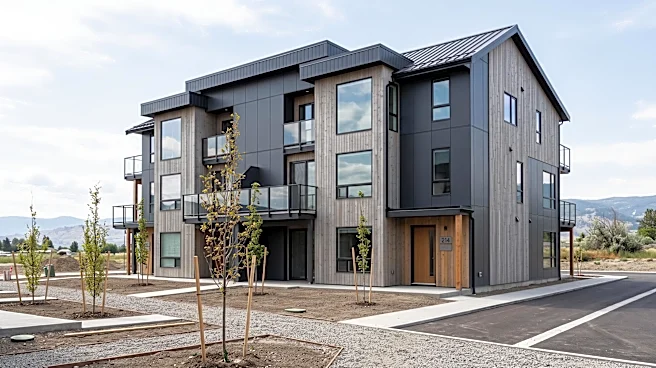
Barre City has received over $4.2 million in federal disaster recovery funding for a redevelopment project in its North End. This initiative aims to construct 17 affordable townhomes and create new flood storage areas, as the city continues to recover from
severe floods in 2023 and 2024. The project, announced by Governor Phil Scott and state officials on October 15, will replace Wobby Park with housing and convert three acquired properties, including the former M&M Beverage building, into flood storage and greenspace. Wobby Park will be relocated to the new greenspace. This grant represents the final allocation from a $67.845 million pool of federal disaster recovery funding designated for Vermont following the July 2023 floods. While state officials emphasize the project's impact, some North End residents express disappointment, feeling their individual needs for flood relief have been overlooked.
Why It's Important?
This federal funding is crucial for Barre City's long-term recovery and resilience against future flooding events, directly addressing the devastating impacts of the 2023 and 2024 floods. The project's dual focus on affordable housing and flood mitigation highlights a strategic approach to urban planning in disaster-prone areas, aiming to rebuild stronger and safer communities. The creation of 17 affordable townhomes will help address housing shortages, while the flood storage areas are vital for protecting existing and future infrastructure. However, the mixed reactions from residents underscore the complex challenges of disaster recovery, where community needs and individual homeowner concerns must be balanced with broader redevelopment goals. This initiative could serve as a model for other U.S. communities facing similar climate-related challenges, demonstrating how federal funds can be leveraged for comprehensive urban renewal and climate adaptation.
What's Next?
Construction of the 17 two-bedroom townhomes is anticipated to begin in May 2027, with completion expected by the summer of 2028. These homes are projected to sell for approximately $270,000 each. City Manager Patrick Cushing stated that planning is progressing, and the project's overarching objectives include reducing impervious surfaces, improving stormwater management, and enhancing drainage. City Councilor Amanda Gustin acknowledged that more work is needed to help North End residents directly, indicating that the city will continue efforts to secure funding for additional mitigation measures, such as buyouts or home relocations. The city is also conducting a scoping study of the North End's stormwater system, with $250,000 in previously awarded federal funds allocated for improvements identified through this process. Future phases of flood mitigation could include acquiring or moving additional at-risk homes and potentially removing or raising bridges.
Beyond the Headlines
The Barre City project reveals a deeper tension between community-wide resilience efforts and individual homeowner relief in the wake of natural disasters. While the city's plan focuses on long-term infrastructure and housing, some residents feel their immediate needs for buyouts or home elevations have been neglected. This highlights a common dilemma in disaster recovery: how to allocate limited resources effectively to both systemic improvements and direct aid to affected individuals. The project also touches upon the evolving strategies for urban development in the face of climate change, where integrating flood mitigation into housing projects becomes a necessity. The ongoing dialogue between city officials and residents will be critical in ensuring that future phases of recovery are more inclusive and address the diverse needs of the community, fostering a sense of equity in the rebuilding process.