
What's Happening?
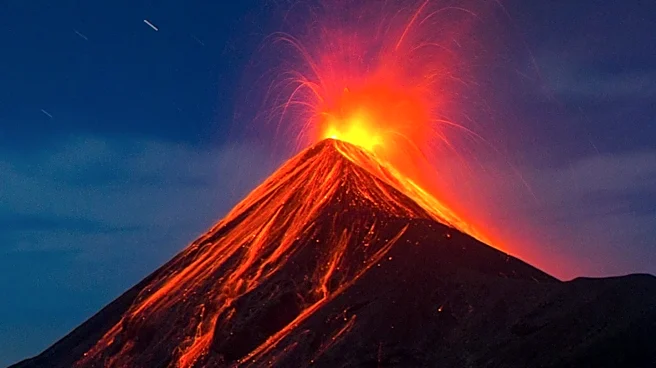
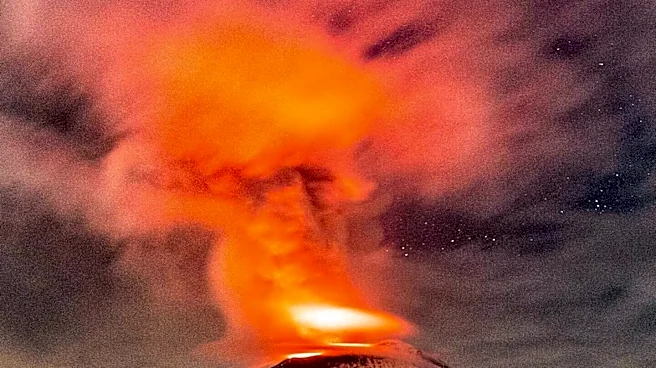
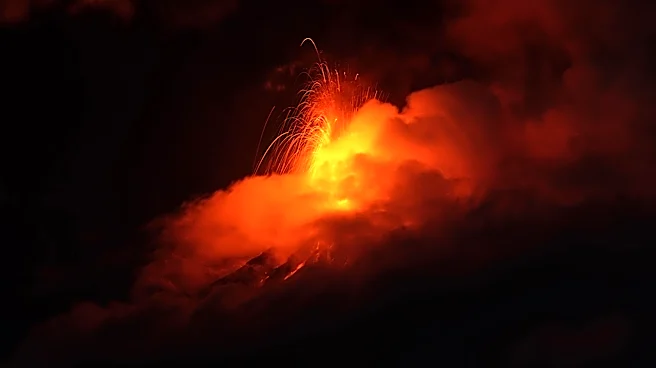
Guatemala's Fuego volcano, one of Central America's most active, recently erupted, prompting the evacuation of approximately 1,700 residents from 18 communities. The eruption, which began on Monday, led to red alerts, highway closures, and the suspension
of classes in three departments. Although volcanic activity has decreased, the National Coordinator for Disaster Reduction (CONRED) warns that heavy rainfall could trigger dangerous volcanic mudflows, known as lahars. Some evacuees have returned home, but authorities continue to advise caution and adherence to evacuation instructions. The Fuego volcano, a stratovolcano with an elevation of 3,768 meters, is located near Guatemala's capital and has a history of deadly eruptions, including one in 2018 that killed hundreds.
Why It's Important?
The eruption of the Fuego volcano underscores the ongoing threat posed by active volcanoes in the Pacific Ring of Fire, a region known for its seismic activity. The potential for deadly mudflows highlights the need for effective disaster preparedness and response strategies in vulnerable communities. The situation also emphasizes the importance of monitoring volcanic activity and providing timely warnings to minimize the impact on human lives and infrastructure. The eruption's impact on local communities, including the disruption of daily life and potential economic losses, illustrates the broader challenges faced by regions prone to natural disasters.
What's Next?
Authorities will continue to monitor the Fuego volcano for any changes in activity and potential mudflow risks. Residents are advised to remain vigilant and follow official guidance regarding evacuations and safety measures. The government may need to assess and improve disaster response plans to better protect communities in the future. Additionally, ongoing communication and coordination between local and national agencies will be crucial in managing the situation and ensuring public safety.