








What's Happening?
In Detroit, the Detroit Black Community Food Sovereignty Network is actively promoting urban farming as a solution to widespread food insecurity. According to the Detroit Food Policy Council, 69% of households in Detroit experience food insecurity, meaning
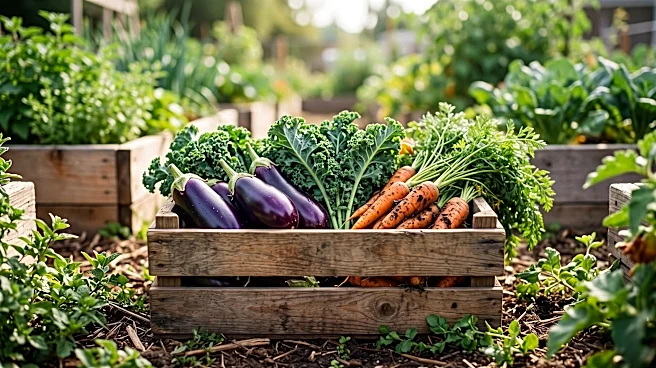
they lack consistent access to enough food for an active, healthy life. Many residents in urban areas, often referred to as 'food deserts,' rely on fast food and convenience stores due to limited access to supermarkets and grocery stores offering healthy, nutritious options. This situation contributes to higher risks of obesity, heart disease, and cancer. The Network, which has been operating for 20 years, encourages residents to grow their own healthy produce or source it from neighbors. Aisha Ellis, farm manager for the network, notes that urban farming can lead to improved health, increased community participation, and the creation of new food traditions within homes. The organization utilizes a local food co-op, an organic farm, and engages with local governments to advance its mission, with plans to expand its efforts to other cities.
Why It's Important?
The efforts of the Detroit Black Community Food Sovereignty Network are crucial for addressing a significant public health and economic challenge in U.S. urban centers. Food insecurity not only impacts individual health outcomes, leading to chronic diseases, but also has broader community and economic implications. By promoting urban farming, the Network empowers residents to take control of their food sources, fostering self-sufficiency and resilience within communities. This initiative can reduce reliance on unhealthy, processed foods prevalent in food deserts, thereby improving public health. Furthermore, urban farming can stimulate local economies by creating jobs, fostering community bonds, and potentially reducing healthcare costs associated with diet-related illnesses. The model developed in Detroit could serve as a blueprint for other U.S. cities grappling with similar issues, highlighting the potential for localized food systems to mitigate systemic food access problems.
What's Next?
The Detroit Black Community Food Sovereignty Network aims to expand its urban farming model beyond Detroit to other U.S. cities facing food insecurity. This expansion would involve replicating their strategies, including establishing local food co-ops, organic farms, and engaging with municipal governments to advocate for supportive policies. The organization also emphasizes the importance of policy changes, indicating that food access is a critical issue that voters should consider in upcoming elections. Continued advocacy and community engagement will be vital for sustaining and growing these initiatives. The success of these efforts could lead to increased investment in urban agriculture programs nationwide, potentially influencing federal and state policies to support local food systems and address food deserts more comprehensively.
Beyond the Headlines
The movement towards urban farming in Detroit highlights a deeper societal shift towards food sovereignty and community resilience. It challenges the conventional industrial food system by advocating for local control over food production and distribution. This approach not only addresses immediate food access issues but also fosters a stronger connection between people and their food, promoting environmental sustainability through reduced transportation and chemical use. The emphasis on policy engagement by the Detroit Black Community Food Sovereignty Network underscores the understanding that systemic change requires both grassroots action and political will. This initiative also touches upon issues of environmental justice, as food deserts disproportionately affect low-income communities and communities of color. By empowering these communities to grow their own food, urban farming becomes a tool for social equity and self-determination.