

What's Happening?
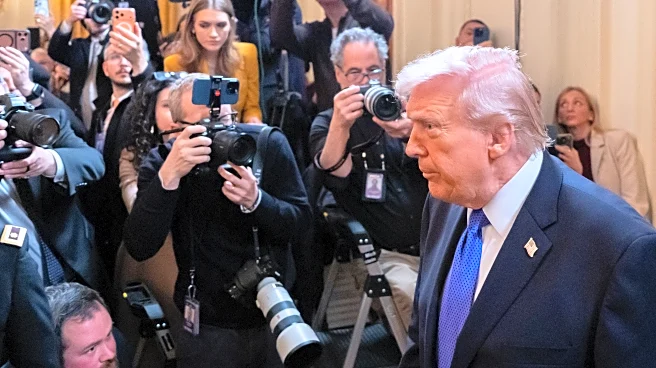
President Trump has been actively engaging in litigation against several major news organizations, including the Wall Street Journal, the New York Times, the British Broadcasting Corporation, the Des Moines Register, and CNN. Additionally, he has filed
a lawsuit against the Pulitzer Prize board. These legal actions are part of a broader strategy to challenge criticisms of his performance and qualifications as a public official. According to Lee Levine, a lawyer with experience representing news organizations, Trump's approach involves using the legal system as a tool to suppress criticism, which raises significant First Amendment concerns. Despite the numerous lawsuits, Trump has not been successful in winning these cases, but the strategy appears to be aimed at intimidating the press and potentially bypassing judicial scrutiny.
Why It's Important?
The implications of President Trump's legal actions against the press are profound, particularly concerning the First Amendment, which protects freedom of speech and the press. By filing lawsuits against media outlets, Trump is challenging the foundational principles of free expression and press freedom in the United States. This strategy could have a chilling effect on journalism, as news organizations may face increased legal risks when reporting on public officials. The broader impact on public discourse and democratic accountability is significant, as it may deter critical reporting and limit the public's access to information about government actions and policies. The legal battles also highlight the tension between the executive branch and the media, raising questions about the role of the judiciary in safeguarding constitutional rights.
What's Next?
As these lawsuits progress, the courts will play a crucial role in determining the balance between protecting free speech and addressing defamation claims. Legal experts and media organizations will likely continue to monitor these cases closely, as their outcomes could set important precedents for future interactions between public officials and the press. Additionally, there may be increased calls for legislative or judicial measures to reinforce protections for journalists and uphold the principles of the First Amendment. The ongoing legal battles may also prompt discussions about the ethical responsibilities of public officials in engaging with the media and the potential need for reforms to prevent the misuse of the legal system.