








What's Happening?
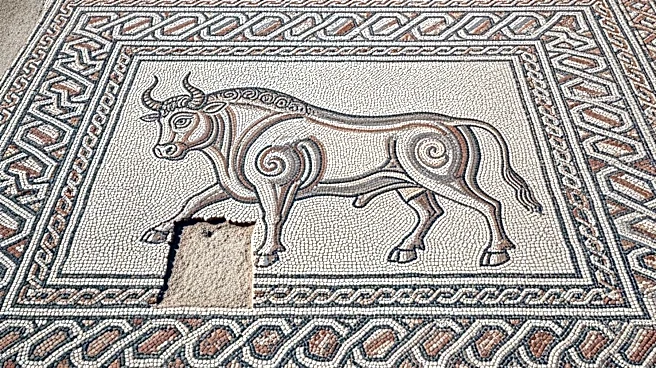
The restoration of the Rampant Bull mosaic in Milan's Galleria Vittorio Emanuele II has drawn public mockery and criticism after the anatomical detail of the bull's testicles was seemingly erased. The mosaic, a 19th-century artwork, required refurbishment
due to wear from tourists performing a heel-spinning ritual believed to bring prosperity. The restoration, costing €30,000, was intended to repair a crater formed in the tiles. However, the absence of the bull's testicles in the restored version has led to accusations of censorship and wasteful spending by Milan's city council. The Galleria, a historic shopping arcade, is a popular tourist destination, and the bull is a symbol of Turin, Italy's capital at the time of the mosaic's creation.
Why It's Important?
The controversy highlights the challenges of preserving cultural heritage sites that are heavily frequented by tourists. The incident raises questions about the balance between maintaining historical accuracy and accommodating modern tourism practices. The public's reaction underscores the cultural significance of such rituals and the expectations for authenticity in restoration projects. The financial implications for the city council, accused of mismanaging public funds, could affect future restoration efforts and public trust in municipal decisions. This situation also reflects broader issues in heritage conservation, where the integrity of historical artifacts must be weighed against the pressures of tourism and public engagement.