

What's Happening?
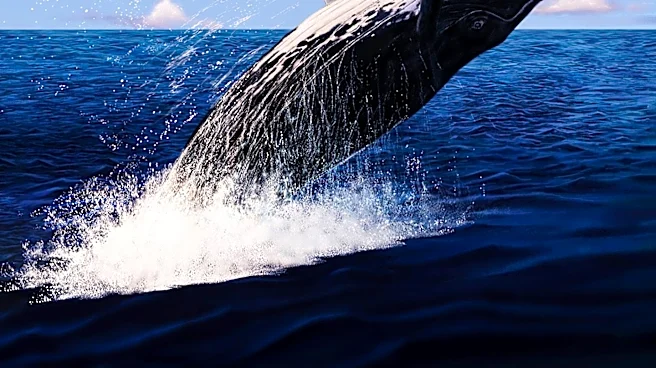
Scientists from NOAA's Stellwagen Bank National Marine Sanctuary have documented a unique hunting strategy among humpback whales in the Gulf of Maine. By attaching video cameras to the whales, researchers observed them engaging in a collaborative hunting technique
on the seafloor. The whales were seen forming a 'star' formation, with their rostrums pointed towards a central location, to round up sand lance fish before simultaneously opening their mouths to capture the prey. This behavior, recorded in 110 seafloor hunting events, is the first of its kind to be documented in humpback whales. However, the researchers, led by David Wiley, express concern that this behavior increases the whales' risk of entanglement in bottom-set fishing gear.
Why It's Important?
The discovery of this unique hunting strategy highlights the complex social behaviors of humpback whales and their adaptability in feeding techniques. However, the potential risk of entanglement in fishing gear poses a significant threat to the whales' safety. This finding could prompt a reevaluation of fishing practices in the region to mitigate risks to marine life. The study underscores the need for increased awareness and possibly new regulations to protect these whales from human-induced hazards. The research also contributes to the broader understanding of marine ecosystems and the interactions between marine species and human activities.
What's Next?
The next steps may involve further research to determine if this hunting strategy is unique to the Gulf of Maine or if it occurs in other whale populations. Additionally, there may be discussions among conservationists and policymakers about implementing measures to reduce the risk of whale entanglement in fishing gear. This could include modifying fishing practices or gear types used in areas frequented by humpback whales. Ongoing monitoring and research will be crucial in developing effective strategies to protect these marine mammals while balancing the needs of the fishing industry.
Beyond the Headlines
This discovery not only highlights the intelligence and adaptability of humpback whales but also raises ethical considerations regarding human impact on marine life. The potential for entanglement in fishing gear poses a moral dilemma about the extent to which human activities should be modified to protect wildlife. The study may also influence cultural perceptions of marine conservation, emphasizing the importance of preserving natural behaviors and habitats. Long-term, this could lead to shifts in public policy and increased support for marine conservation initiatives.