

What's Happening?
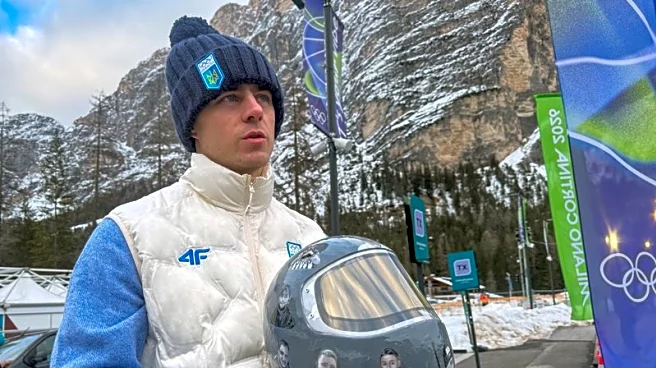
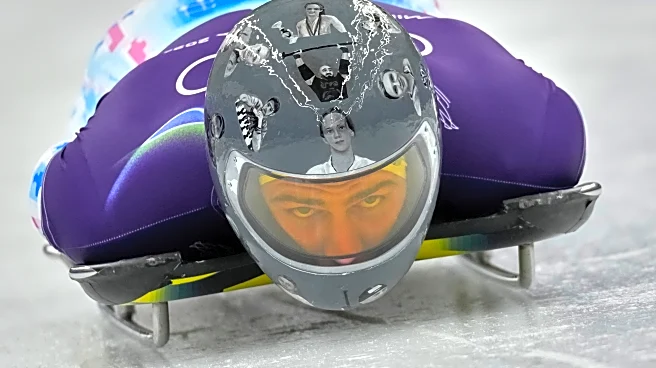
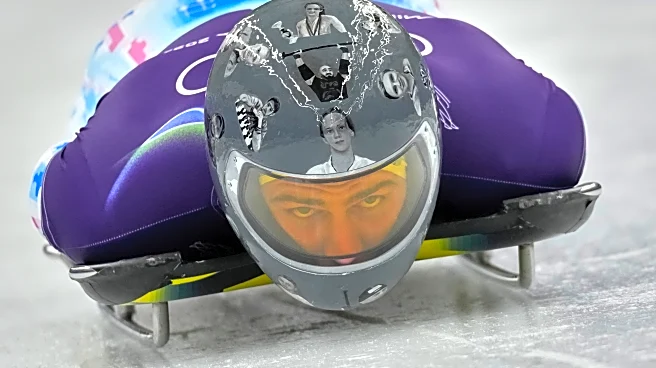
The International Olympic Committee (IOC) is set to address Ukrainian skeleton racer Vladyslav Heraskevych regarding his decision to wear a helmet depicting fellow competitors killed in the war. Heraskevych, who was the Ukrainian flag bearer, expressed
his intention to wear the helmet during race day, despite IOC rules prohibiting political gestures or expressions of opinion during competitions. The IOC spokesperson, Mark Adams, stated that the committee would try to persuade Heraskevych to compete without the helmet, although he would be allowed to display it during press conferences and other non-competitive settings.
Why It's Important?
This situation highlights the ongoing tension between athletes' rights to express personal and political beliefs and the IOC's regulations aimed at maintaining the focus on sports. The decision by Heraskevych to wear the helmet underscores the impact of the ongoing conflict in Ukraine on its citizens, including athletes. The IOC's response will be closely watched as it navigates the balance between upholding its rules and acknowledging the personal experiences of athletes affected by global events. This incident may prompt discussions on the role of sports as a platform for political expression.
What's Next?
The IOC's handling of this situation could set a precedent for future cases where athletes wish to make political statements during competitions. The outcome may influence the IOC's policies on political expressions and gestures, potentially leading to revisions in its rules. Additionally, the response from the international community and other athletes will be important in shaping the discourse around the intersection of sports and politics. Heraskevych's actions may inspire other athletes to use their platforms to raise awareness about global issues.