




What's Happening?
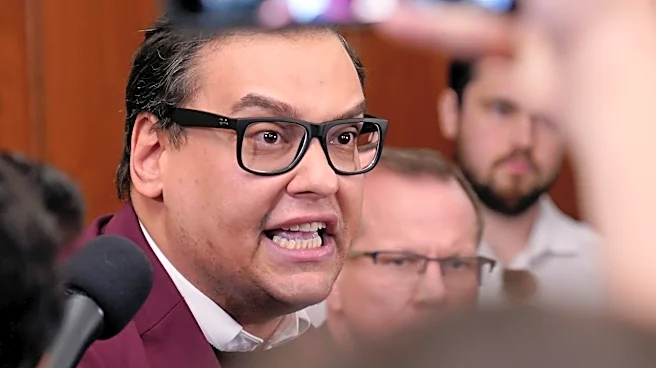
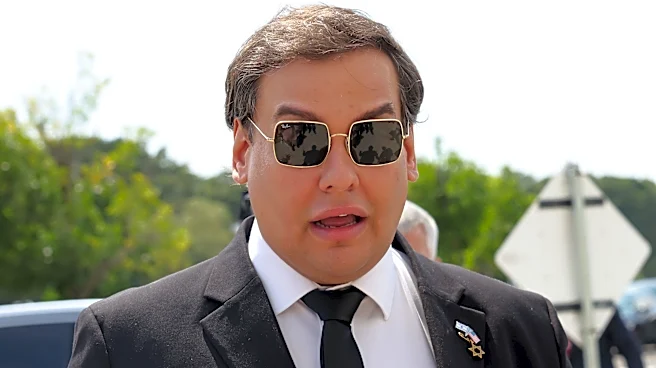
Former Republican Representative George Santos has denied allegations of insider trading following reports that a prediction market flagged his activities to federal authorities. The online platform Kalshi reported Santos to the Commodity Futures Trading
Commission (CFTC) for allegedly using nonpublic information to bet against his attendance at President Trump's February State of the Union address, despite publicly stating he would attend. Santos missed the event, citing a delayed flight. The Department of Justice (DOJ) is reportedly investigating, although a DOJ spokesperson stated there is no current investigation. Santos has called the allegations 'preposterous' and expressed willingness to cooperate with any inquiry.
Why It's Important?
The allegations against Santos highlight concerns about the integrity of prediction markets, which are increasingly scrutinized by regulators for potential manipulation. If Santos is found to have used insider information, it could lead to stricter regulations on prediction markets and impact their operation. The case also underscores the challenges of ensuring transparency and fairness in financial markets, which could affect investor confidence. For Santos, the investigation could further damage his reputation, already marred by previous legal issues, and impact his future political and public endeavors.
What's Next?
As the investigation unfolds, Santos and his legal team are in contact with authorities to clarify the situation. The outcome could influence future regulatory measures on prediction markets. Stakeholders, including lawmakers and financial regulators, may push for more stringent oversight to prevent similar incidents. The case could also prompt other platforms to review their policies and practices to avoid regulatory scrutiny.
Beyond the Headlines
The situation raises ethical questions about the use of prediction markets and the potential for individuals with privileged information to exploit them. It also reflects broader concerns about accountability and transparency in political and financial spheres. The case could lead to discussions on the ethical boundaries of market participation by public figures and the need for clear guidelines to prevent conflicts of interest.