





What's Happening?
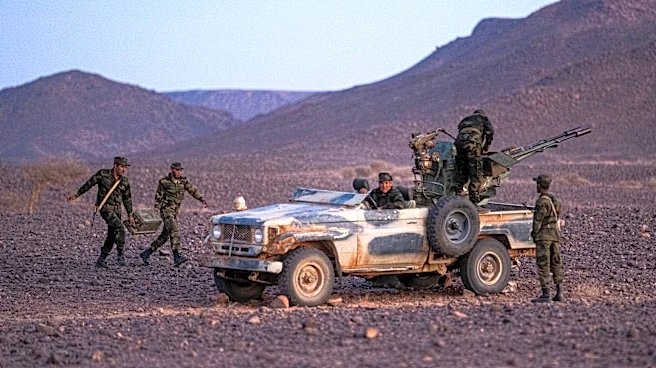
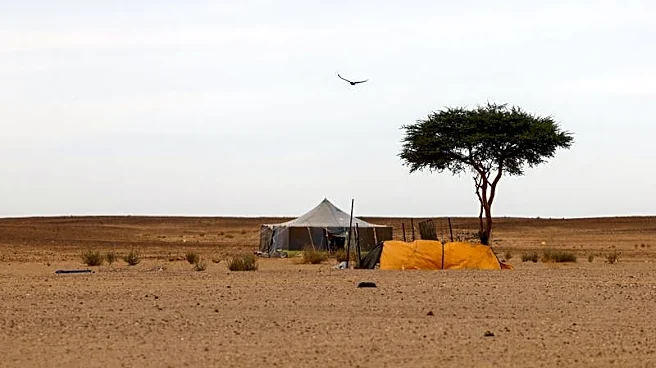
The UN's peacekeeping chief, Jean-Pierre Lacroix, has issued a warning regarding a potential security vacuum as 'Blue Helmets' withdraw from Lebanon and Western Sahara. The UN Mission for the Referendum in Western Sahara (MINURSO) concluded its operations
on October 31 after 35 years, due to the Security Council's failure to agree on renewing its mandate. Similarly, the peacekeeping force in Lebanon, which has patrolled the border with Israel since 1978, is scheduled to cease operations by the end of the year. Mr. Lacroix highlighted that the organization is losing some of its longest-standing military deployments without guarantees that the affected countries can maintain stability independently. He recently returned from Lebanon, where President Joseph Aoun and Prime Minister Nawaf Salam expressed concerns about a 'security vacuum' once peacekeepers depart, fearing that border incidents could escalate into clashes. The UN Secretary-General António Guterres presented options in June, but the Security Council has not yet reached an agreement on a follow-on arrangement.
Why It's Important?
The withdrawal of UN peacekeeping forces from critical regions like Lebanon and Western Sahara carries significant implications for regional stability and international security. In Lebanon, the departure of UNIFIL could remove a crucial buffer between the Lebanese army and the Israel Defense Forces, potentially leading to an increase in border incidents and a higher risk of conflict escalation. This situation could destabilize a region already prone to geopolitical tensions. For the United States, such instability could necessitate increased diplomatic engagement or even military involvement to protect its interests and allies in the Middle East. In Western Sahara, the cessation of MINURSO's operations, which was established to monitor a ceasefire between Morocco and the Polisario Front, could reignite hostilities that resumed in 2020. The failure of the Security Council to agree on a renewed mandate, partly due to Russia's veto of a U.S. draft, underscores the challenges in international cooperation and the potential for major powers to impede peacekeeping efforts, leaving vulnerable populations without protection and increasing the likelihood of renewed conflict.
What's Next?
The immediate future involves the complete withdrawal of UNIFIL from Lebanon by year-end, unless the Security Council can reach an agreement on a new arrangement. UN Secretary-General António Guterres has presented options, and Mr. Lacroix has urged council members to decide on the form of a future international presence. The liquidation phase of MINURSO in Western Sahara is underway, with the UN continuing to advocate for restraint from all parties and a political solution that ensures self-determination for the people of Western Sahara. The ongoing review of the UN's military and technological capabilities, in response to new threats like drone attacks on peacekeepers in Abyei, suggests a broader re-evaluation of peacekeeping strategies. However, Mr. Lacroix emphasized that the ultimate solution is not purely technical but requires 'political responsibility' from member states to prevent further security vacuums and ensure the safety of civilians and peacekeepers.
Beyond the Headlines
The challenges faced by UN peacekeeping missions in Lebanon and Western Sahara highlight a deeper issue within international diplomacy: the increasing difficulty of achieving consensus among Security Council members, particularly concerning sensitive geopolitical matters. The Russian veto of a U.S. draft regarding Western Sahara exemplifies how great power rivalries can directly undermine efforts to maintain peace and stability. This deadlock not only impacts the immediate regions but also signals a potential weakening of the UN's capacity to act as a neutral arbiter and peacekeeper globally. The humanitarian consequences are also profound, as seen with the estimated 10,000 people living between the Blue Line and Israel's forward defense line in Lebanon, whose access to aid heavily relies on UNIFIL. The withdrawal of these forces could leave these populations vulnerable, raising ethical questions about the international community's responsibility to protect civilians in conflict zones when political will is lacking.