








What's Happening?
Alliant Energy is set to receive over $5 billion in federal loans to modernize and construct natural gas and energy storage infrastructure. The U.S. Department of Energy announced this low-interest financing at an Alliant Energy natural gas plant in Beloit,
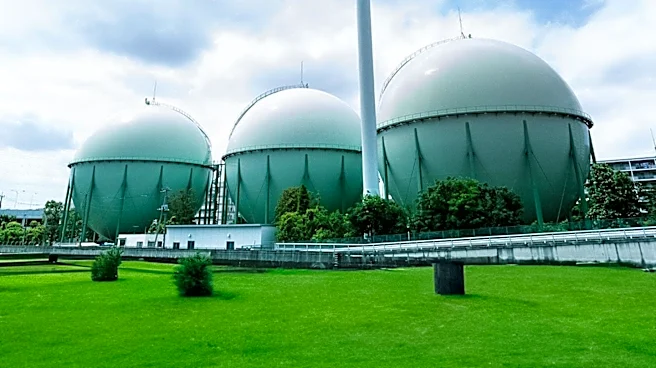
Wisconsin. Federal officials state that the funding will enhance power generation, bolster electric grid reliability, and reduce costs for consumers in Wisconsin and Iowa. The $5.1 billion loan package is expected to facilitate the addition of more than 2.6 gigawatts of new or upgraded electricity generation capacity, sufficient to power nearly 2 million homes. This investment comes as Wisconsin's peak energy demand is projected to increase by 40% by 2032, largely due to the growth of data centers, including one being built by Meta within Alliant’s service territory. Alliant Energy CEO Lisa Barton indicated that these loans would help decrease construction costs, potentially saving customers $1.2 billion over the lifespan of the projects. The company plans to pursue 1.6 gigawatts of new natural gas generation, 240 megawatts of increased capacity at existing facilities, 1 gigawatt of energy storage, and 2 billion cubic feet of liquefied natural gas storage, creating over 1,600 construction jobs.
Why It's Important?
This significant federal investment in Alliant Energy's infrastructure highlights a strategic push to meet rising energy demands and ensure grid stability in the Midwest. The projected 40% increase in Wisconsin's energy demand by 2032, driven by data centers, underscores the urgency for expanded generation capacity. While the loan aims to lower costs for consumers and create jobs, it also sparks debate regarding environmental policy. Environmental groups, such as the Sierra Club’s Wisconsin Chapter, express disappointment over the substantial investment in fossil fuels, arguing it will impede efforts to reduce emissions and combat climate change. They contend that continued reliance on natural gas will exacerbate pollution and health impacts. Conversely, proponents argue that natural gas serves as a crucial bridge fuel, providing reliable power while renewable energy sources are scaled up. The funding, initially proposed by the Biden administration as a $3 billion conditional loan for clean energy, has been expanded and re-emphasized under the current administration, reflecting a broader strategy to support both data center growth and the fossil fuel industry.
What's Next?
Alliant Energy will proceed with its plans to upgrade and build new natural gas and energy storage facilities, with specific project details expected to be announced in the coming weeks. The company anticipates that the federal financing will enable it to achieve its goals of enhancing reliability, system resiliency, and driving economic development. However, the investment is likely to face continued scrutiny from environmental organizations, which may intensify their advocacy for cleaner energy alternatives and stricter emission regulations. The debate over the balance between energy reliability, economic growth, and environmental protection will likely persist, influencing future energy policy decisions at both federal and state levels. The long-term implications for Wisconsin and Iowa's energy mix, including the pace of transition to renewable sources, will be closely watched as these projects develop. The success of these projects in meeting demand and controlling costs will also be a key factor in future public and regulatory discussions.
Beyond the Headlines
The federal loan to Alliant Energy underscores a complex interplay between economic development, energy policy, and environmental concerns. The substantial investment in natural gas infrastructure, despite growing calls for decarbonization, reflects a pragmatic approach to energy security and economic growth, particularly in regions experiencing rapid industrial expansion like data centers. This decision highlights the ongoing challenge of balancing immediate energy needs with long-term climate goals. Ethically, it raises questions about intergenerational equity, as current energy choices will have lasting environmental impacts. Legally, it could influence future regulatory frameworks for energy projects, potentially setting precedents for how federal funding is allocated across different energy sectors. Culturally, it reflects a societal tension between technological advancement and environmental stewardship, where the benefits of increased computing power and economic activity are weighed against the imperative to reduce carbon footprints. This development could also signal a broader trend in U.S. energy policy, where fossil fuels continue to play a significant role alongside renewables, rather than being phased out rapidly.