
What's Happening?
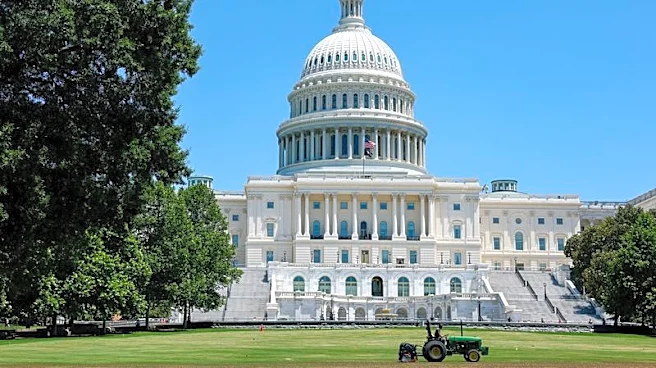
The House of Representatives has passed a resolution to limit President Trump's military powers in Iran, with a vote of 215-208. The resolution directs the president to remove US Armed Forces from hostilities
with Iran unless Congress declares war or authorizes military force. This marks the first time the House has defied the White House on the conflict, which has been ongoing without congressional authorization. The resolution's passage reflects growing unease among Republicans over the war's unpopularity and its potential impact on the upcoming midterm elections.
Why It's Important?
The resolution highlights the constitutional debate over war powers between Congress and the president. The War Powers Resolution of 1973 requires the president to seek congressional authorization for military action after 60 days, a deadline that has passed without action. The Trump administration argues the resolution is unconstitutional and maintains the president's authority to act decisively. The resolution's passage is largely symbolic, as it is unlikely to reach the president's desk or carry legal force. However, it signals a shift in political dynamics, with lawmakers seeking to assert their constitutional responsibilities.
What's Next?
The resolution now moves to the Senate, where a similar measure has already advanced. The Senate's final vote remains uncertain, and even if passed, it would likely face a presidential veto. The conflict with Iran continues, with sporadic hostilities and a fragile ceasefire in place. Efforts to reach a negotiated settlement have yet to succeed, and the resolution's passage may influence future legislative actions and negotiations. Lawmakers are expected to continue pushing for congressional oversight and authorization in military matters.