







What's Happening?
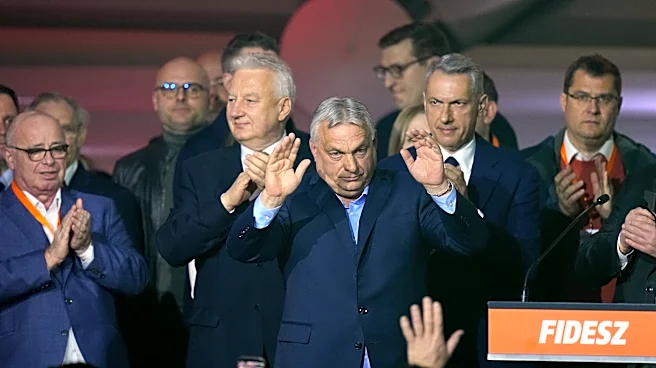
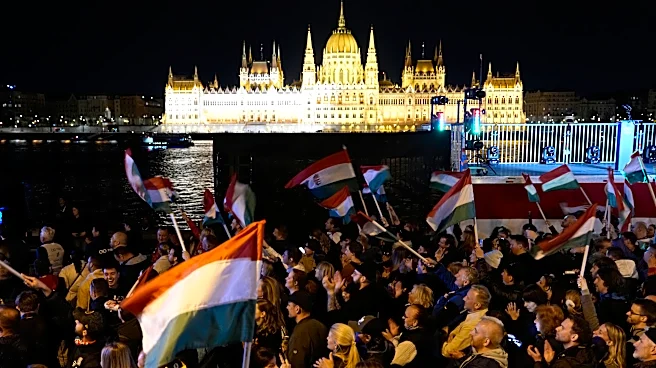
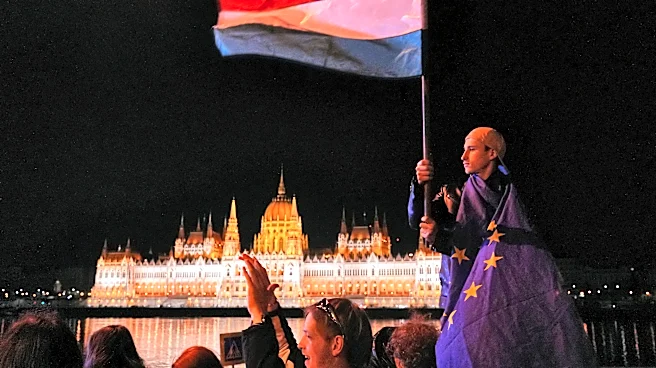
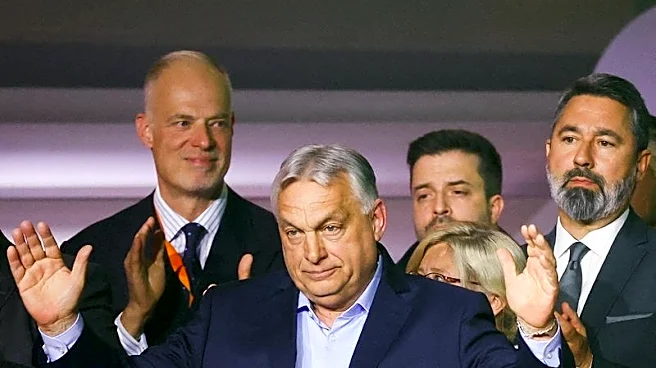
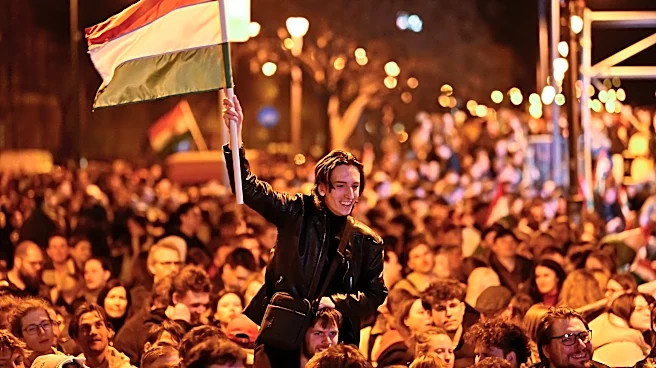
Hungary has witnessed a historic election that ended Viktor Orbán's 16-year tenure as Prime Minister. The election saw a high turnout and a decisive victory for the opposition, led by Péter Magyar, who now faces the daunting task of dismantling Orbán's entrenched
illiberal system. Despite Orbán's defeat, his influence remains strong, with loyalists embedded in key sectors and a pro-Orbán oligarchy controlling significant parts of the economy and media. The new government must navigate legal and institutional challenges to restore democratic principles and address economic issues, including high inflation.
Why It's Important?
The election marks a significant shift in Hungary's political landscape, offering hope for a return to liberal democracy. However, the transition is fraught with challenges, as Orbán's policies have left deep scars on the nation's governance and economy. The outcome is crucial for Hungary's relationship with the European Union, which has been strained by Orbán's authoritarian practices. The new government's ability to implement reforms and restore the rule of law will be pivotal in determining Hungary's future trajectory and its role within the EU.
What's Next?
Péter Magyar's government will need to address the legal and institutional remnants of Orbán's regime, potentially amending the constitution to facilitate democratic reforms. The EU is likely to maintain pressure on Hungary to ensure compliance with democratic standards. The opposition must also manage public expectations, as the process of rebuilding democratic institutions and economic stability will be gradual. Orbán's political influence may persist, posing challenges to the new administration's efforts to enact change.